Circular RNA, with its high stability, low immunogenicity, and sustained translation capability, is regarded as a key carrier for next-generation RNA therapeutics and shows broad application potential in protein therapy, cancer research. Recently, a collaborative research team from Tsinghua University, China Pharmaceutical University and CAS published an important study in Nature Communications, entitled “Split intron-exon system for circular RNA synthesis.” The study innovatively proposed a split intron-exon (SIE) system that physically separates the ribozyme from the substrate, enabling a single ribozyme to catalytically cycle through multiple substrates like a proteinaceous enzyme, overcoming the “one ribozyme, one product” efficiency bottleneck and enabling efficient synthesis of chemically modified circRNAs. At the same time, this design provides new possibilities for ribozyme immobilization, recycling, and the scale-up production of circRNAs.
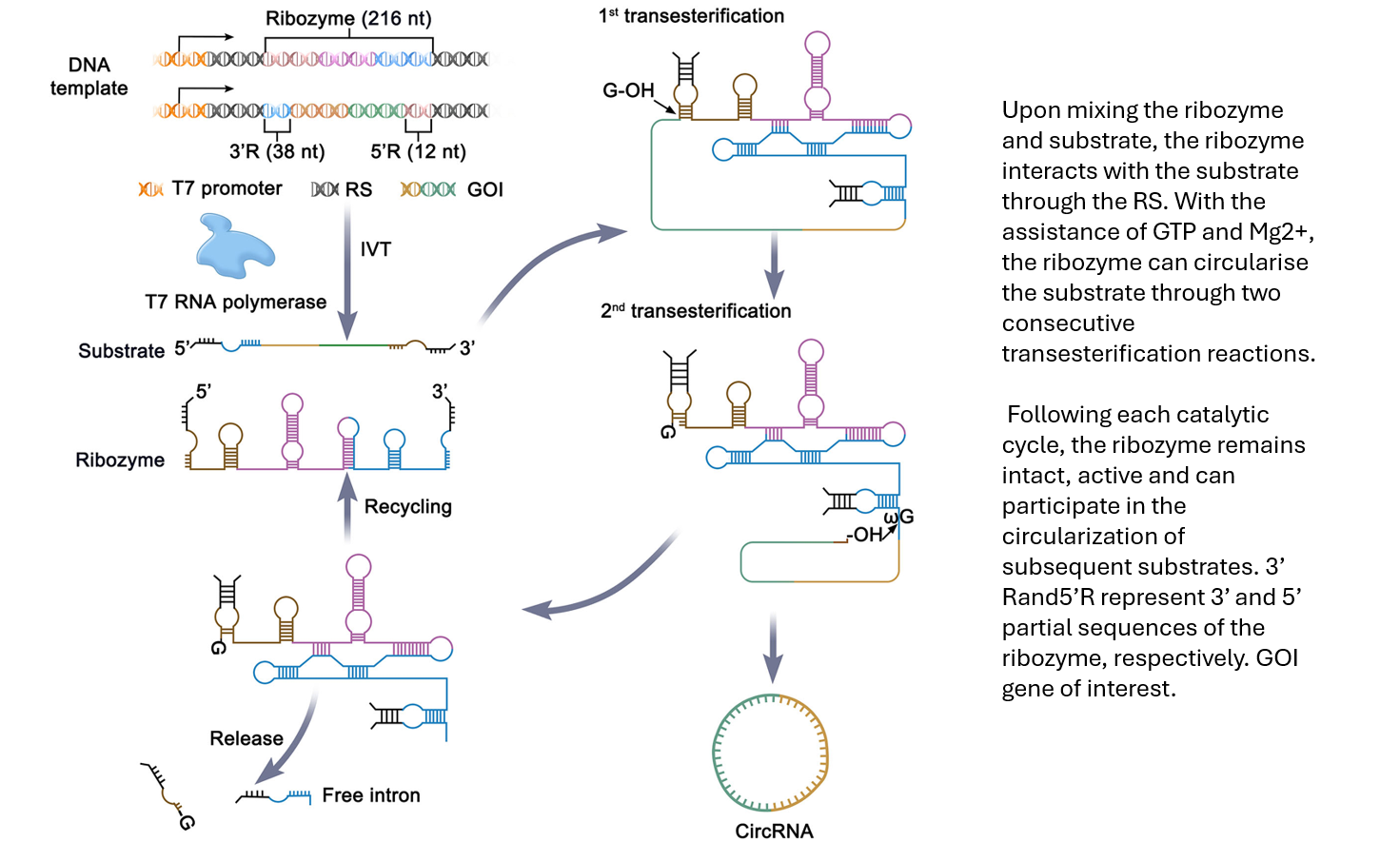
Fig. 1 | Design of the SIE for circRNA synthesis. A schematic diagram depicts the circRNA synthesis process utilizing SIE system. The ribozyme and the substrate were respectively synthesised through IVT using a T7 promoter.
However, obtaining high-purity circRNA from the reaction system while effectively removing linear RNA, high-molecular-weight RNA, and other impurities remains a key technical challenge. To address this, in the circRNA purification and characterization step, the research team used an Elite EClassical 3200 Series high-performance liquid chromatography (HPLC) system, equipped with a 4.6 × 300 mm size exclusion column (particle size 5 μm, pore size 1000 Å), with RNase-free phosphate buffer (150 mM sodium phosphate, pH 7.0) as the mobile phase at 0.6 mL/min, and detected and collected RNA by UV absorbance at 260 nm, achieving precise separation of circular products from linear impurities (relevant results are shown in Supplementary Fig. 4b).
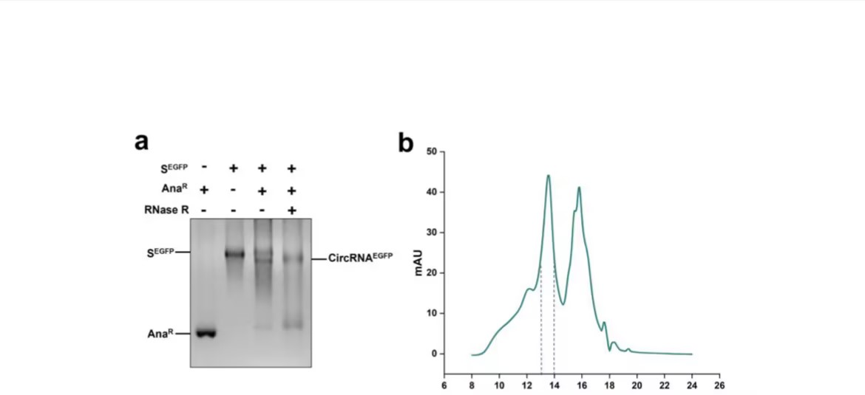
Purification and characterization of circRNA synthesized through SIE system. (a) The RNase R digestion assay distinguishes the circRNA synthesized through SIE. indicated. (b) HPLC was performed to purify the circRNA based on retention time.
With stable and reliable separation performance and high-sensitive UV detection, the Elite EClassical 3200 met the critical demand for high-purity circRNA preparation, provided high-purity samples for subsequent RT-PCR, sequencing validation, cell transfection, and in vivo experiments, and made an important contribution to the study in the circRNA purification step. This study further demonstrates the potential of HPLC technology in the preparation and quality control of novel RNA molecules, providing a technical reference for circRNA research and scale-up production.
Further Reading
“As RNA-based therapeutics continue to evolve, HPLC is playing an increasingly important role in the separation, characterization, and quality control of complex biological molecules. This article explores the development of HPLC technology and its expanding applications in emerging fields, including mRNA vaccine analysis and biopharmaceutical quality control.“ - Learn more about the evolving role of HPLC in biopharmaceutical and RNA-related applications →
Title: Split intron-exon system for circular RNA synthesis | Journal: Nature Communications,2026,17, 9163