In chromatography, the instrument only executes the analytical process. The true separation capability defines the upper limit of system performance. But a classic dilemma has haunted separation science for decades – “how to achieve both perfectly spherical, monodisperse microparticles and well-ordered internal mesopores within the same material?”.
Now the TiTAN (Template-in-Template Assembly Nanostructuring) strategy, developed by Prof. Bo Zhang’s team at Xiamen University in partnership with Elite for commercial-scale implementation, finally decouples these two variables in production perfectly.
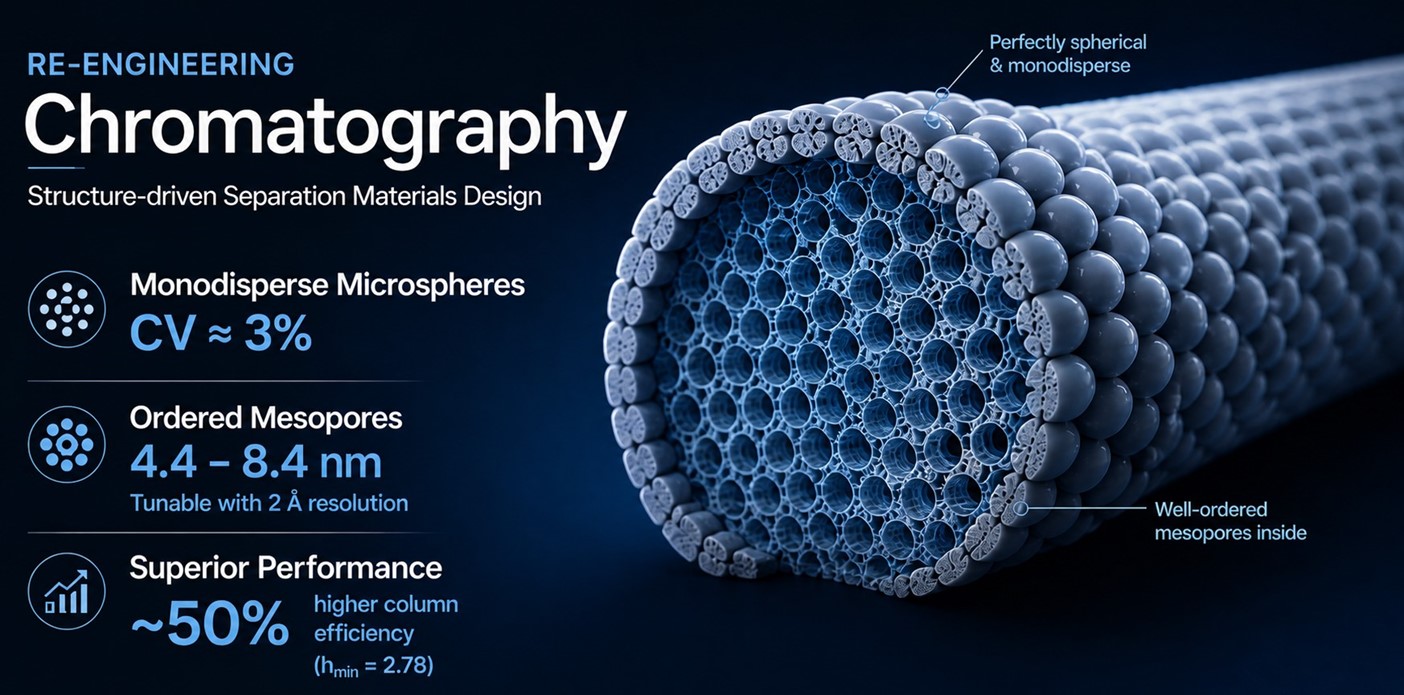
Key results:
- Particle size CV ≈ 3% (excellent monodispersity).
- Tunable mesopores from 4.4 to 8.4 nm with 2 Å resolution.
- After C18 bonding, the ordered mesoporous silica microspheres (OMP) show ~50% higher column efficiency (hmin = 2.78) compared to traditional totally porous particles (TPP).
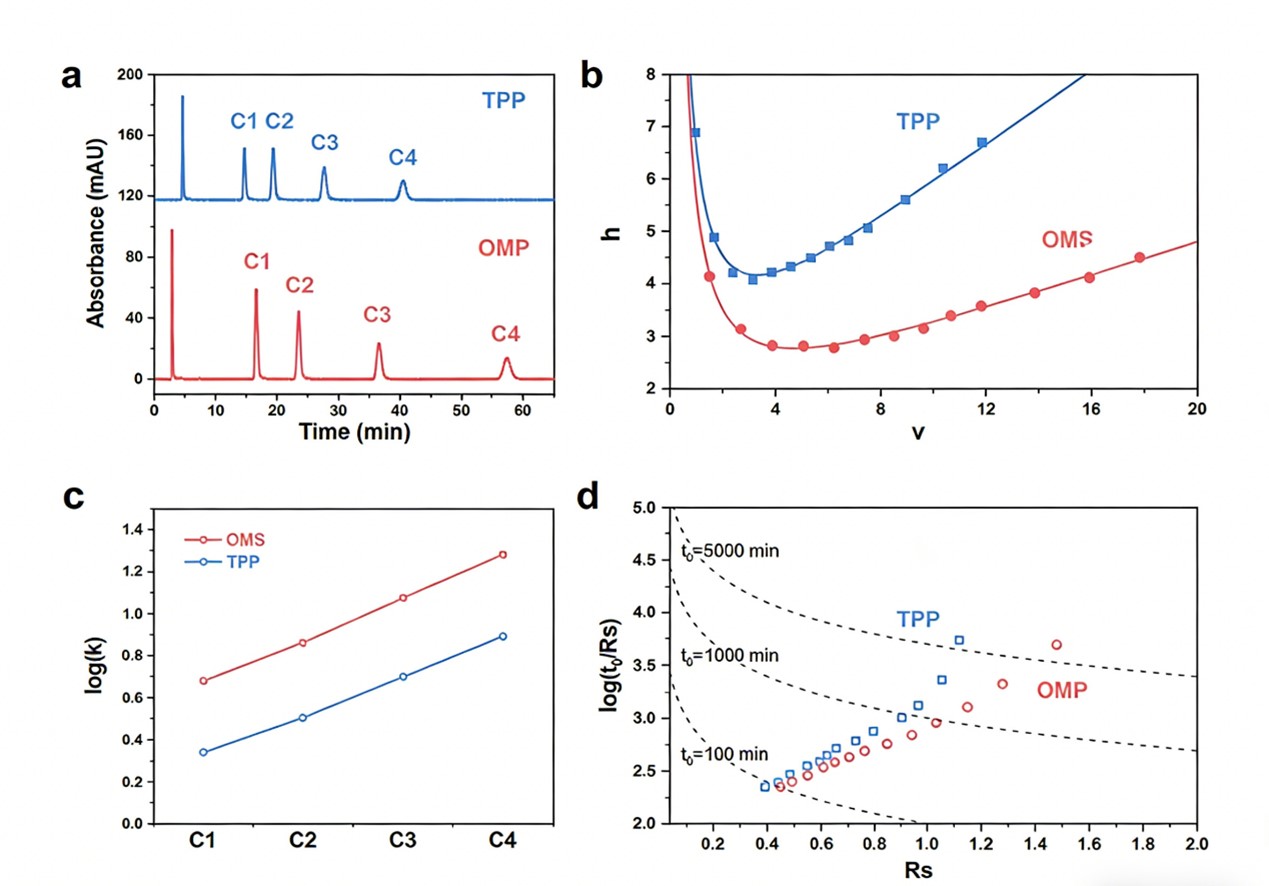
Figure 1. Performance comparison between ordered mesoporous microspheres and totally porous particles (TPP).
- Baseline separation of critical challenging pairs on a 15 cm short column:
- 16 PAHs including benzo(b)fluoranthene/benzo(k)fluoranthene (Rs=1.77)
- xylene isomers (o-, m-, p-xylene) – a long-standing challenge under standard C18 conditions
- benzene and deuterated benzene (Rs=1.51) – nearly identical physicochemical properties, now separated on a standard column.
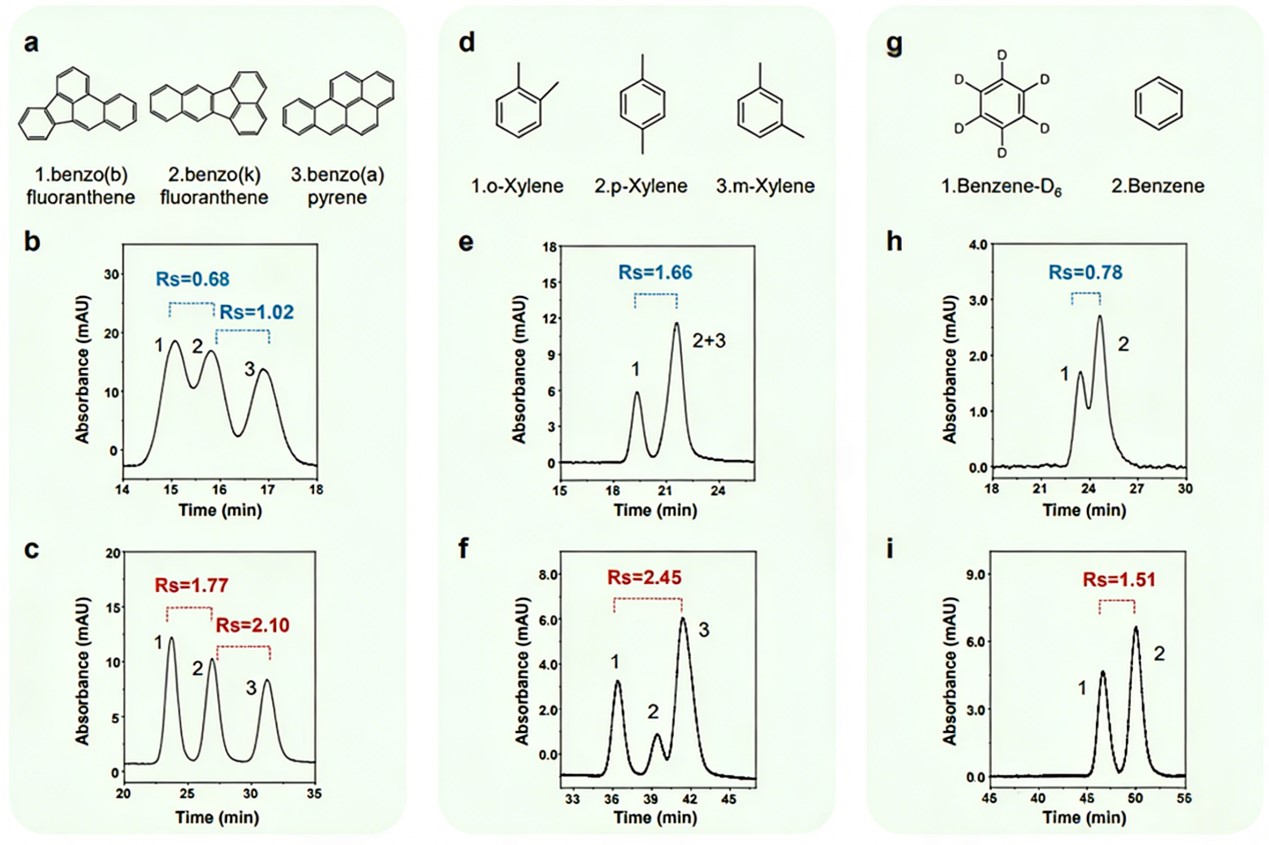
Figure 2. Chromatographic separation of key substance groups on monodisperse ordered mesoporous microspheres.
This breakthrough marks the beginning of “Chromatography 2.0”: moving from empirical formulation to precise, rational design of separation media. The TiTAN approach decouples external morphology from internal pore architecture, opening the door to application-specific customization of chromatographic materials.
Behind this scientific advance is a strategic synergy between Prof. Bo Zhang’s team and Elite HPLC. By bridging cutting-edge micro/nano fabrication with scalable manufacturing, we are jointly bringing next‑generation ordered mesoporous packings to real-world analytical and preparative separations.
The true improvement in chromatography does not always demand the accumulation of expensive hardware. By re-engineering the packing material from the inside out, we offer a more accessible path to peak performance—achieving "Chromatography 2.0" efficiency through the power of materials science.