In the biopharmaceutical industry, from drug discovery in the laboratory to large‑scale manufacturing and finally to the patient, every step is tied to the lifeline of “safety and efficacy”. High performance liquid chromatography (HPLC), as a separation and analysis tool that combines high resolution and high sensitivity, has become deeply integrated into the entire biopharmaceutical chain and is a core instrument for ensuring drug quality.
I. New Drug Development: Precise Characterisation of Biological Macromolecules
The journey of biopharmaceutical development often begins with the study of biological macromolecules such as proteins, peptides, and monoclonal antibodies. These components have complex structures; even tiny impurities or structural differences can affect drug activity and safety. Here, HPLC acts as a “precise inspector”. By optimising conditions such as mobile phase ratio and column temperature, it can quickly separate the target active ingredient from impurities.
Using the qualitative and quantitative capabilities of HPLC, researchers can not only accurately assess the purity of candidate drugs – for example, determining whether a therapeutic antibody contains incompletely purified host cell proteins – but also monitor drug stability under different conditions (e.g., whether degradation occurs under simulated storage conditions). These critical data provide a reliable basis for subsequent process optimisation and formulation design, helping to reduce detours in new drug development.
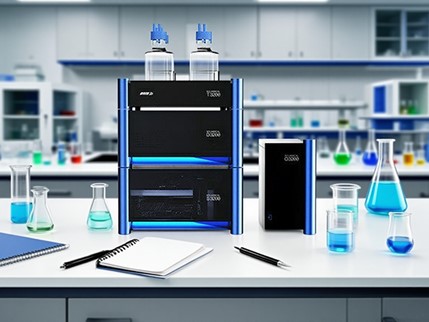
II. Manufacturing Quality Control: Real‑Time Assurance of Batch‑to‑Batch Consistency
Biopharmaceutical production requires meticulous work: metabolic changes in the fermentation broth, protein expression efficiency during cell culture, and the effectiveness of impurity removal in purification steps – any fluctuation can lead to product quality inconsistency. HPLC acts as an “on‑line supervisor” on the production line, safeguarding product quality throughout.
Taking monoclonal antibody production as an example, during the purification stage HPLC can separate the product on a specific column and measure the content of aggregates and degradation products in real time – if these impurities exceed the limit, they could trigger immune reactions in patients. In addition, during cell culture, HPLC can quickly analyse the concentrations of nutrients such as glucose and amino acids in the fermentation broth, helping staff adjust culture conditions in time to ensure stable protein expression. Thanks to the strict control provided by HPLC, each batch of biopharmaceutical product can achieve consistent quality, avoiding potential safety hazards caused by batch‑to‑batch variation.
III. Finished Product Release: The Final Check Against Pharmacopoeial Standards
Before a drug can be marketed, it must pass the stringent tests of pharmacopoeial standards, and HPLC is the “core examiner” in finished product release testing. Whether for the determination of active ingredient content or for the detection of related substances (impurities), HPLC has become the industry’s method of choice because of its excellent reproducibility and accuracy.
For example, in the production of insulin preparations, HPLC can precisely measure the insulin content in each formulation, keeping the error within a very narrow range and ensuring compliance with pharmacopoeial content limits. In vaccine production, HPLC can even perform trace analysis of adjuvant residues – detecting them at the parts‑per‑million level – thereby eliminating potential adverse reactions due to residual adjuvant. Only after comprehensive testing by HPLC can a drug obtain its “marketing permit” and be safely delivered to patients.
IV. Biosimilars: Supporting the Scientific Verification of “Similarity”
As patents on original biopharmaceuticals expire, biosimilars have become an important way to reduce drug costs and improve access to medicines. The key to marketing a biosimilar is to demonstrate “high similarity” to the original product in terms of quality, safety, and efficacy, and HPLC plays the role of a “critical comparator” in this process.
Using HPLC analysis, researchers can compare the chromatograms of the biosimilar and the original product: comparing the retention time of the main peak to judge the consistency of the main component, evaluating the number and area of impurity peaks to assess differences in impurity types and levels, and even analysing subtle structural differences such as glycosylation patterns using specific chromatographic methods – these are core elements for judging similarity. With scientific data from HPLC, the comparability assessment of biosimilars becomes more convincing, facilitating their compliant market entry.
V. Stability Studies: Safeguarding the “Shelf Life” of Drugs
During storage and transport, drugs may degrade due to environmental factors such as temperature and humidity, affecting efficacy or even generating toxic substances. Therefore, determining the shelf life and storage conditions of drugs is an important task in the biopharmaceutical industry, and HPLC acts as a “reliable observer” in stability studies.
In accelerated stability studies, researchers use HPLC to periodically test drug samples and track the formation of degradation products over time – for example, monitoring whether the level of degradation products increases with time under high‑temperature conditions, and then calculating the shelf life under normal storage conditions. At the same time, HPLC can help identify the best storage conditions – whether refrigeration or room temperature is required, whether protection from light is needed – all based on the data obtained from HPLC measurements, ensuring that the drug remains safe and effective throughout its life cycle.
Technological Upgrades: HPLC Continuously Empowers Biopharmaceutical Innovation
As the biopharmaceutical industry develops rapidly, HPLC technology itself continues to evolve, bringing new possibilities. For example, ultra‑high performance liquid chromatography (UHPLC) uses columns with smaller particle sizes and higher‑pressure systems, not only cutting analysis times by more than half but also further improving separation resolution – minor impurities that were previously difficult to separate can now be accurately detected.
The coupling of HPLC with mass spectrometry (LC‑MS) provides a “double guarantee” for component identification in complex matrices. In impurity analysis of biopharmaceuticals, HPLC separates the components, while mass spectrometry precisely identifies the molecular structure of the impurities. This allows researchers to know not only that “there is an impurity” but also “which impurity it is”, providing deeper guidance for process optimisation and quality control.
From “source control” in drug discovery to “real‑time protection” during manufacturing and the “final check” before market release, high performance liquid chromatography is a steadfast “quality guardian” of the biopharmaceutical industry. As the variety of biological drugs continues to expand – from antibody drugs and vaccines to cell therapy products – the application scenarios of HPLC will also broaden, injecting ever more momentum into the high‑quality development of the biopharmaceutical industry and ensuring patient drug safety.