In chromatography labs, many researchers have encountered this problem: how to accurately capture the "trace" of organic compounds that lack UV absorption? That’s when the Evaporative Light Scattering Detector (ELSD) shows its special skill. As a universal detector that can measure almost anything, it has become an indispensable tool for many chromatographers.
1. Working Principle of the Evaporative Light Scattering Detector
To understand how it works, just remember three steps: Nebulisation → Evaporation → Detection.
Nebulisation stage
As soon as the column eluent enters the detector, it meets a high‑pressure gas stream (usually nitrogen) that "magically" nebulises it into countless fine, uniform droplets – as light as dispersed mist.
Evaporation stage
These fine droplets then pass through a heated drift tube, where the solvent and volatile components are removed, leaving only the non‑volatile analyte particles.
Detection stage
The remaining particles enter a scattering cell. When a laser beam strikes them, the particles scatter the light. A photomultiplier tube captures this scattered light, and the intensity of the scattered light is converted into an electrical signal, which is then amplified, processed, and finally transformed into the chromatogram we see.
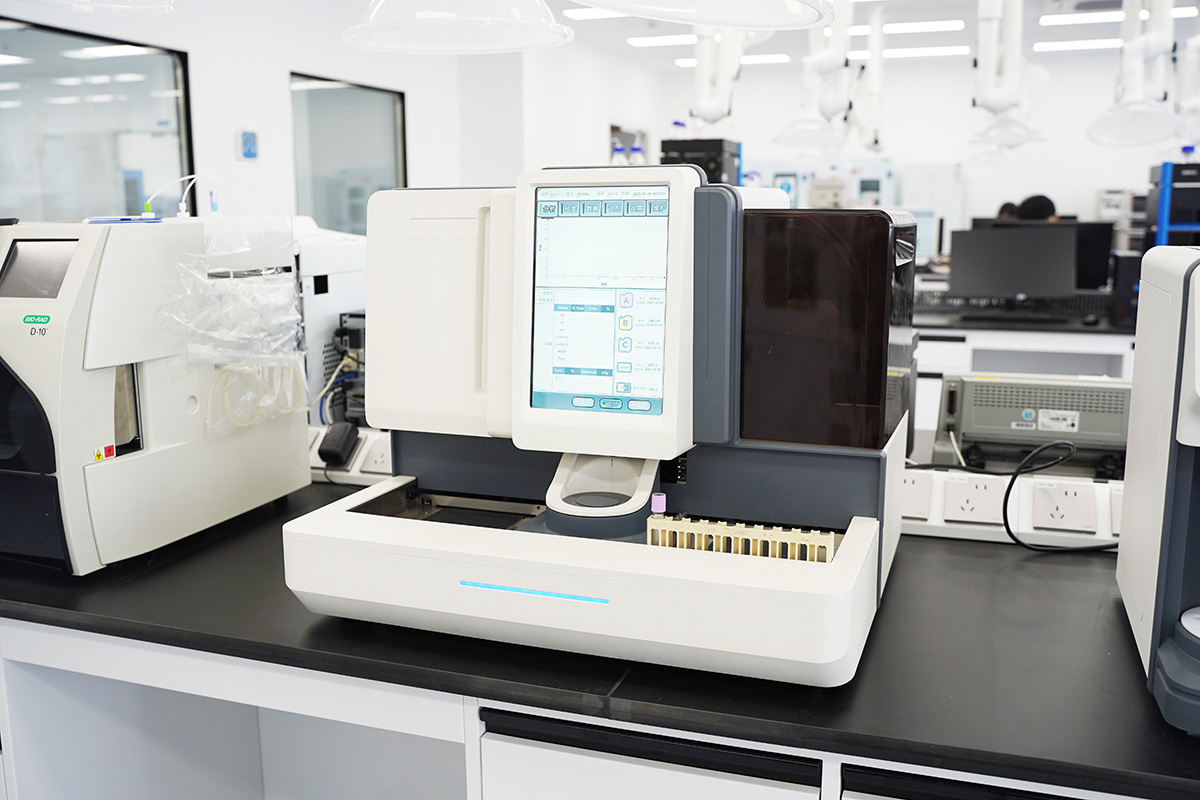
2. Advantages of the Evaporative Light Scattering Detector
Broad applicability
Unlike UV detectors, ELSD does not depend on the analyte having a UV chromophore. It can easily handle compounds that are difficult for conventional HPLC detectors – such as sugars, lipids, and polymers.
Mass‑dependent signal
The detection signal is directly related to the mass of the analyte. Therefore, when determining purity or identifying unknown substances, you do not necessarily rely on reference standards.
Compatible with gradient elution
Because the mobile phase is completely evaporated, the baseline does not drift during gradient elution, giving stable, reliable chromatograms.
No solvent peak interference
Solvents are removed during the evaporation stage, so the chromatogram usually shows no solvent peak – clean and clear data.
3. Points to Keep in Mind When Using ELSD
Optimise the nebuliser gas
The purity and pressure of the gas directly affect the “sharpness” of the detection. Use high‑purity nitrogen and adjust the nebuliser gas flow rate to an appropriate value.
Choose the mobile phase carefully
Do not use non‑volatile buffer salts (e.g., phosphates), as they may block the system.
Set the evaporation temperature appropriately
Adjusting the evaporation temperature can improve separation, but be aware:
Temperature too low → mobile phase not completely evaporated → noisy baseline.
Temperature too high → low‑boiling target analytes may be lost → no signal.
Tip: For compounds with a boiling point lower than water, gas chromatography (GC) is a more suitable technique.
Signal‑concentration relationship
The chromatographic peak area in ELSD is not directly proportional to the sample concentration. However, taking the natural logarithm of both gives a linear relationship – keep this in mind for quantitative analysis.
Universal nature of light scattering detection
ELSD can detect any substance that forms particles and scatters light. The signal depends only on the mass of the analyte, regardless of its chemical structure.
4. Common Application Areas
Pharmaceutical industry – analysing antibiotics, natural products and other complex components to help ensure drug quality.
Food testing – determining sugar content, fatty acids, and additives, safeguarding food safety.
Chemical industry – monitoring polymer molecular weight distribution and surfactant content, enabling more precise production.