Liquid chromatography (HPLC) and gas chromatography (GC) are widely used in education, scientific research, pharmaceuticals, pesticides, environmental protection, epidemic prevention, commodity inspection, food, feed, petrochemicals, coal, dyes, fine chemicals, bioengineering, and many other industries.
The core difference between HPLC and GC lies in the mobile phase and the state of the analyte
HPLC uses a liquid mobile phase and analyses substances that can be dissolved in a liquid. GC uses a gas (carrier gas) as the mobile phase and analyses substances that can be vaporised at high temperature.
Put simply, GC “transports” the sample as a gas, while HPLC “transports” the sample as a liquid. The different means of transport determine which samples can be carried and which analytical methods are used.
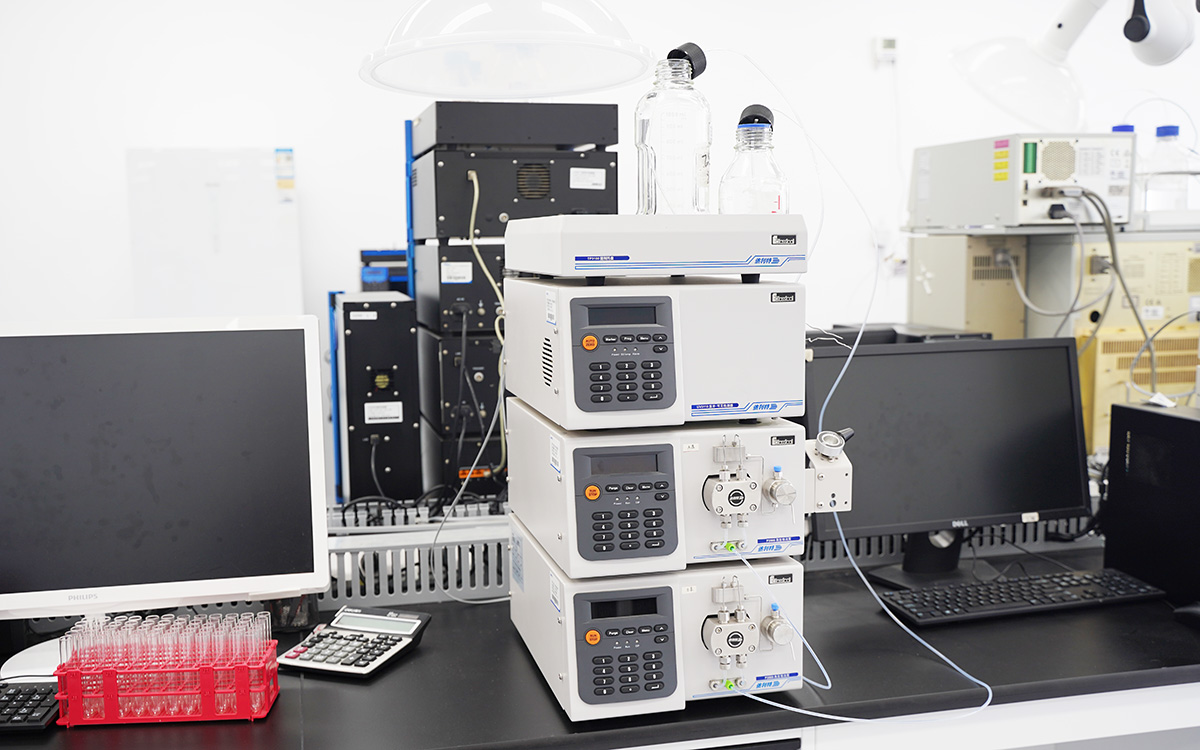
Differences between HPLC and GC
1. Application range
GC
Suitable for samples that can be vaporised, have good thermal stability, and have low boiling points.
Cannot be used for high‑boiling, poorly volatile, thermally unstable, ionic, or polymeric samples.
Only about 15–20% of organic compounds can be analysed by GC.
HPLC
Suitable for samples that can be dissolved to form a solution.
Can analyse high molecular weight, poorly volatile, thermally unstable, polymeric, ionic samples, as well as physiologically active substances.
Widely applicable – covers about 80–85% of organic compounds.
2. Mobile phase
GC
Mobile phase is a gas.
The mobile phase is usually non‑toxic and easy to handle.
The mobile phase has no affinity for the sample components; it interacts only with the stationary phase and does not participate in the partition equilibrium.
HPLC
Mobile phase is a liquid.
Most mobile phases are toxic.
Easily pollutes the environment.
Higher cost.
The mobile phase has an affinity for the sample components, which improves column selectivity and resolution, playing a major role in the separation.
A wide variety of mobile phases are available, offering many choices.
The polarity and pH of the mobile phase significantly affect the separation.
Two or more liquids can be mixed in different ratios as the mobile phase, increasing separation selectivity.
- Stationary phase
GC: Many types available.
HPLC: Fewer types than for GC.
- Columns
GC: Capillary columns can achieve very high column efficiency.
HPLC: Columns cannot be very long, so column efficiency is relatively lower.
- Selectivity
GC: The mobile phase does not affect the partition; selectivity is changed mainly by varying the stationary phase and column temperature.
HPLC: Selectivity is changed mainly by varying the mobile phase.
- Detectors
GC: Offers highly sensitive selective detectors as well as moderately sensitive universal detectors.
HPLC: Offers moderately sensitive universal detectors.
- Operating temperature
GC: Heated (elevated temperature).
HPLC: Room temperature.
- Operation and difficulty
GC: Easier.
HPLC: Slightly more complex than GC.
- Instrument complexity
GC: Simpler construction than HPLC.
HPLC: More complex construction.
- Sample recovery
GC: The sample is destroyed; recovery is difficult.
HPLC: The sample is not destroyed; recovery is easy and can be quantitative, suitable for preparative work.
- Other points
HPLC can accomplish more difficult separations. In GC, the carrier gas is inert, does not participate in the partition equilibrium, and has no affinity for the components – only the stationary phase interacts. In HPLC, the mobile phase does have an affinity for the components, improving column selectivity and resolution. The use of two or more liquids in different ratios as the mobile phase increases separation selectivity. HPLC is usually operated at room temperature, which is favourable for choosing separation conditions.
Whenever a sample can be analysed by GC, it is generally preferred because GC is faster, more sensitive, more convenient, and less expensive.
How to choose? Look at your sample – that’s enough
Instead of memorising parameters, just ask yourself three questions, and you will quickly decide.
Can the sample “withstand high temperature”? Can it be vaporised?
Yes – e.g., measuring components in gasoline, constituents in flavours: choose GC. It is fast, accurate, and saves solvent.
No – e.g., analysing glycosides in traditional Chinese medicine (they decompose on heating), proteins in blood: only HPLC will do – gentle and non‑destructive.
Is the sample “bulky”? (Molecular weight > 500?)
Yes – e.g., analysing DNA, polymers, antibody drugs: choose HPLC directly. GC cannot handle large molecules.
No – then also consider volatility. For small volatile molecules (e.g., ethanol) use GC; for small non‑volatile molecules (e.g., sugars) use HPLC.
Is the sample “charged”? (Ionic or very polar)
Yes – e.g., measuring chloride or sulfate ions in water: choose HPLC (ion chromatography mode) – that is its special strength.
Not “which is better”, but “which is right”
HPLC and GC have never been competitors; they are “golden partners” in the laboratory.
GC is the “sprinter for small molecules”, specialising in samples that can be vaporised and are heat‑stable – fast separation at low cost.
HPLC is the “guardian for large molecules”, protecting samples that are heat‑sensitive or bulky – gentle, precise, and non‑destructive.
Next time you face a sample, first understand its “personality”: can it be vaporised at high temperature? How big is its molecular weight? Is it charged? Then choose the right “vehicle” for it – your analytical work will be twice as efficient with half the effort.