Whether you are a beginner in the laboratory or an experienced professional who has worked with instruments for years, to keep a liquid chromatography operating stably and to obtain accurate and reliable data, every operational detail must be taken seriously. The following usage requirements and specifications are summarized from practical daily experience; following them will both protect the instrument and help you avoid many detours.
I. Environment and Basic Preparation
Like people, instruments also need a comfortable “working environment”. Place the instrument on a stable, vibration‑free workbench, away from heat sources such as radiators and ovens, and avoid direct sunlight – temperature fluctuations and a messy environment can easily affect the analytical results. Generally, the ambient temperature should be controlled between 15‑30 °C, and the humidity should meet the instrument manual’s requirements. Clean the workbench regularly to keep the surroundings tidy, so the instrument can work well.
Power supply and proper grounding are also essential. Use a stable power supply; voltage fluctuations can not only cause data drift but also damage the instrument. In addition, good grounding is indispensable – it not only prevents electric shock during operation but also avoids electromagnetic interference that can lead to data instability. Safety and accuracy are always the top priorities.
II. Mobile Phase (Solvent) Preparation
The mobile phase is the “blood” of the liquid chromatograph; its quality determines the smoothness of the analysis. Solvents and reagents must be HPLC‑grade or higher. Do not use lower‑grade materials to save costs – inaccurate data will waste more time and effort.
The aqueous phase must be freshly prepared ultrapure water with a resistivity of 18.2 MΩ·cm. Pure water stored for a long time can breed bacteria and incorporate impurities that will block tubing and columns.
Before use, all mobile phases must be filtered through a 0.22 μm or 0.45 μm membrane to remove particulate impurities. Otherwise, these small particles will act like “sand”, wearing down the pump head and clogging the column, leading to costly and time‑consuming repairs.
After filtration, the mobile phase must also be degassed – either by sonication or using an online degasser. After degassing, allow it to return to room temperature before use; otherwise, temperature differences can cause tiny bubbles to form again, affecting pumping stability.
For buffer salts, two points must be remembered: first, try to avoid salts that easily precipitate in organic solvents (e.g., phosphate), and keep the organic proportion not too high, otherwise salt precipitation may block the tubing. Second, buffer salt solutions should be prepared fresh just before use. Do not prepare large volumes for storage – they can easily grow bacteria, contaminating the system and affecting results. How to protect the pump and column will be detailed in the cleaning procedure section later.
III. Pump and Fluid Delivery System
When selecting a mobile phase for the pump, first consider solvent compatibility. Never use pure organic solvents such as pure acetonitrile as the mobile phase – they can easily cause the check valve to stick, leading to the pump failing to draw liquid and requiring disassembly for repair. It is generally recommended that the aqueous proportion be no less than 5% to reduce the probability of check valve problems.
Bubbles are a major enemy of the pump and fluid delivery system; they must be prevented and expelled in time. Before pumping, ensure the mobile phase is thoroughly degassed. If bubbles are found in the tubing, use a syringe to aspirate and remove them. If the pump pressure is unstable and the flow rate fluctuates, it is likely that air has entered the pump; performing the prime/purge operation will solve the problem.
When changing mobile phases, if the two phases are immiscible (e.g., switching from hexane to methanol), never change them directly. An intermediate solvent such as isopropanol must be used to flush the system, otherwise salts or strongly polar substances may precipitate and block the tubing. Additionally, after each experiment using a buffer salt, the cleaning procedure must be performed immediately. Do not wait until the liquid has dried – once the salt crystallises, it becomes much harder to remove.
IV. Column Use and Maintenance
The column is the “heart” of the liquid chromatograph. Use it strictly according to the instruction manual. First, the pH tolerance range – most columns have a pH range of 2‑8, though some special columns may have a wider range. Never inject strong acid or strong base samples, especially alkaline samples with pH > 8, as they can quickly damage the stationary phase and shorten column life.
Operating pressure must not exceed the maximum pressure tolerance of the column and instrument. If the pressure suddenly rises abnormally, do not continue – this is usually a sign of blockage. Immediately investigate the cause; otherwise, the column may be crushed.
Maintain a constant column oven temperature. Temperature stability ensures good reproducibility of analytical results; otherwise, the data will be inconsistent and unusable.
After installing a new column or changing the mobile phase, equilibrate the column thoroughly with the new mobile phase – typically 10‑20 column volumes – until the baseline is stable before starting the analysis; otherwise, the data will be inaccurate.
If the column will not be used for a long time, clean and store it according to the instruction manual. Reversed‑phase columns are usually stored in methanol or acetonitrile, normal‑phase columns in hexane. One important point: never store a column in pure water, as it can hydrolyse the stationary phase and promote bacterial growth.
Also, it is recommended to install a guard column in front of the analytical column, especially when handling complex samples. A guard column traps most impurities and extends the life of the analytical column – an analytical column is expensive, so any saving is worthwhile.
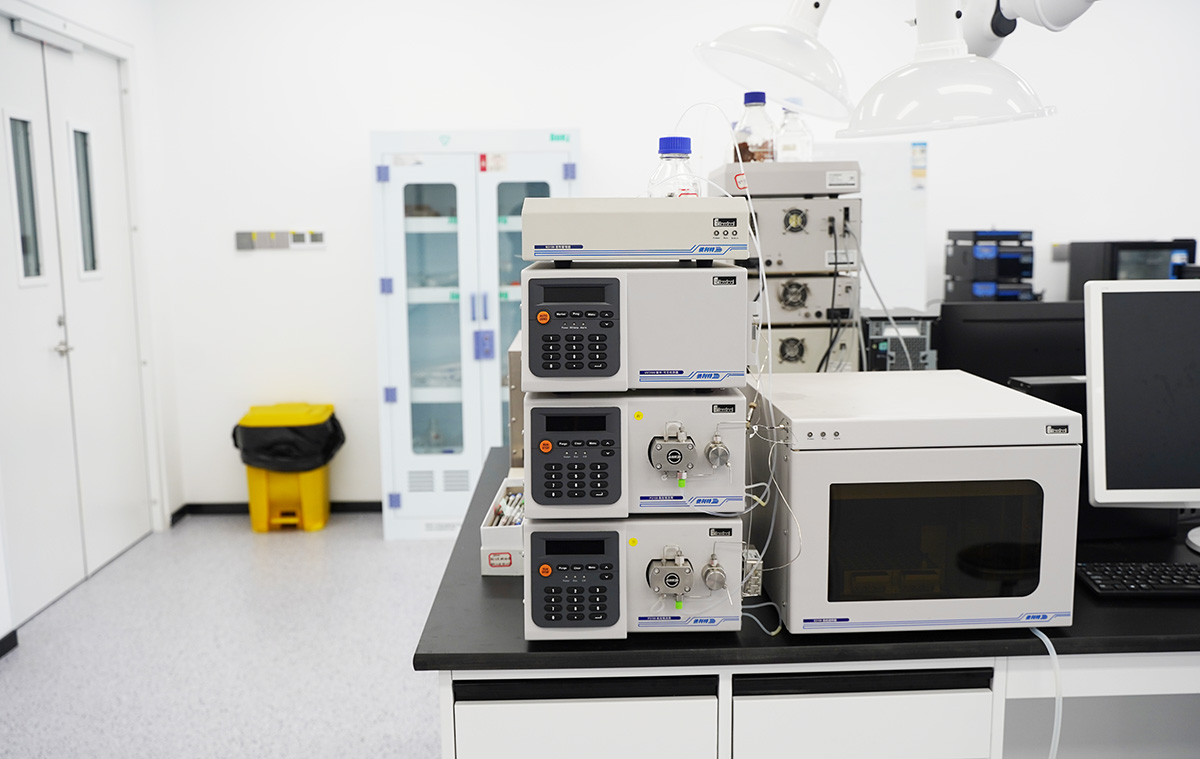
V. Injection System
Sample preparation before injection is critical. The sample solution must be clear and must be filtered through a 0.22 μm or 0.45 μm membrane. Pay attention to using the correct membrane material for the mobile phase – do not mix them. If the sample contains particulate impurities, they will clog the injection needle and the column, leading to the need for part replacement and repetition of experiments.
The solvent used to dissolve the sample also matters. Whenever possible, use the mobile phase or a solvent weaker than the mobile phase. Using a strong solvent can cause the “solvent effect”, leading to distorted peak shapes and affecting quantitative results.
After each sample analysis, the injector must be thoroughly cleaned, including both the inner and outer walls of the injection needle, using a solvent that dissolves the sample. Otherwise, sample carryover will contaminate the next sample, causing cross‑contamination and potentially ruining previous work.
Certain samples must never be injected directly, such as proteins, blood, tissue homogenates, and samples containing insoluble particles. These samples must be pre‑treated – for example, by protein precipitation, extraction, centrifugation, and filtration – before injection. Otherwise, they will cause serious damage to the instrument.
VI. Detector
The flow cell in the detector is a key component for ensuring accurate data; it must be kept clean. Many times, baseline instability or inaccurate data are caused by a contaminated flow cell – either from buffer salt precipitation or sample residue. Therefore, after each use, the flow cell must be cleaned according to the prescribed procedure.
For detectors that use a lamp (e.g., UV detectors), pay attention to extending lamp life. Do not turn the lamp on and off unnecessarily. When the instrument is not in use, turn off the lamp following the procedure. Frequent switching shortens lamp life – replacing a lamp is expensive, so any saving is welcome.
VII. System Cleaning and Shutdown
After an experiment using a buffer‑containing mobile phase, the cleaning steps must not be skipped. Perform the following procedure immediately: first, flush the tubing and column with deionised water (or 5‑10% methanol/water) at a low flow rate for at least 30‑60 minutes to thoroughly remove salt residues. Then flush with methanol or acetonitrile at a higher flow rate for more than 40 minutes to displace the aqueous phase and remove organic residues. If cleaning is not thorough, salt will crystallise in the tubing and cause blockages the next time the system is started, making cleaning even more troublesome.
For shutdown: first reduce the system flow rate to zero, then turn off the detector lamp, then turn off the pump and software, and finally disconnect the power. Do not rush; follow the sequence step by step. This protects the various components and extends the overall service life of the instrument.
VIII. Fault Prevention and Troubleshooting
Regular preventive maintenance can greatly reduce the occurrence of faults.
If the pressure is too high (likely a blockage): Check and clean in the following order: first the guard column – replace or clean it as needed; then the in‑line filter in the mixer – remove and clean it; then the tubing filter – inspect and clean it; finally the pump check valves – if clogged, flush them with isopropanol or sonicate them in isopropanol; if clogged with inorganic material, 10% dilute nitric acid can also be used.
If the pressure is too low or zero: First check whether the mobile phase has run out and whether any tubing fittings are leaking. If both are fine, there may be a large amount of air in the pump – performing the prime/purge procedure will solve the problem.
If the baseline is noisy or drifting: First check whether the mobile phase is fresh and thoroughly degassed; then check whether the detector lamp energy is sufficient and whether the lamp is near the end of its life; then check whether the column oven temperature is stable; finally check whether the flow cell is contaminated – if so, clean it promptly.
In fact, if you follow the above requirements and specifications, the liquid chromatograph will remain in optimal working condition, the data obtained will be reliable, and the service life of both the instrument and columns will be significantly extended – saving both worry and money.