Liquid chromatography is widely used in teaching, scientific research, Chinese and Western pharmaceuticals, pesticides, environmental protection, epidemic prevention, commodity inspection, food, feed, petrochemicals, coal, dyes, fine chemicals, bioengineering, and many other industries. From students learning the principles of substance separation in university laboratories, to pharmaceutical companies precisely controlling ingredient purity during drug development, to environmental personnel tracking pollutants and food inspectors safeguarding daily meals – it is a trusted “analytical partner” for professionals in various fields, quietly supporting the precision development of different industries.
In recent years, liquid chromatography technology has developed rapidly, continuously expanding its application boundaries. For example, in environmental monitoring, it has been used to determine hydrocarbon pollutants in water and non‑volatile hydrocarbons in seawater, providing advanced means for pollution analysis and driving progress in this field. What once took a great deal of time to complete pollutant screening can now be done much faster, making pollution source identification more targeted, strengthening the technical defence for the ecological health of rivers and lakes, and ensuring the safety of drinking water.
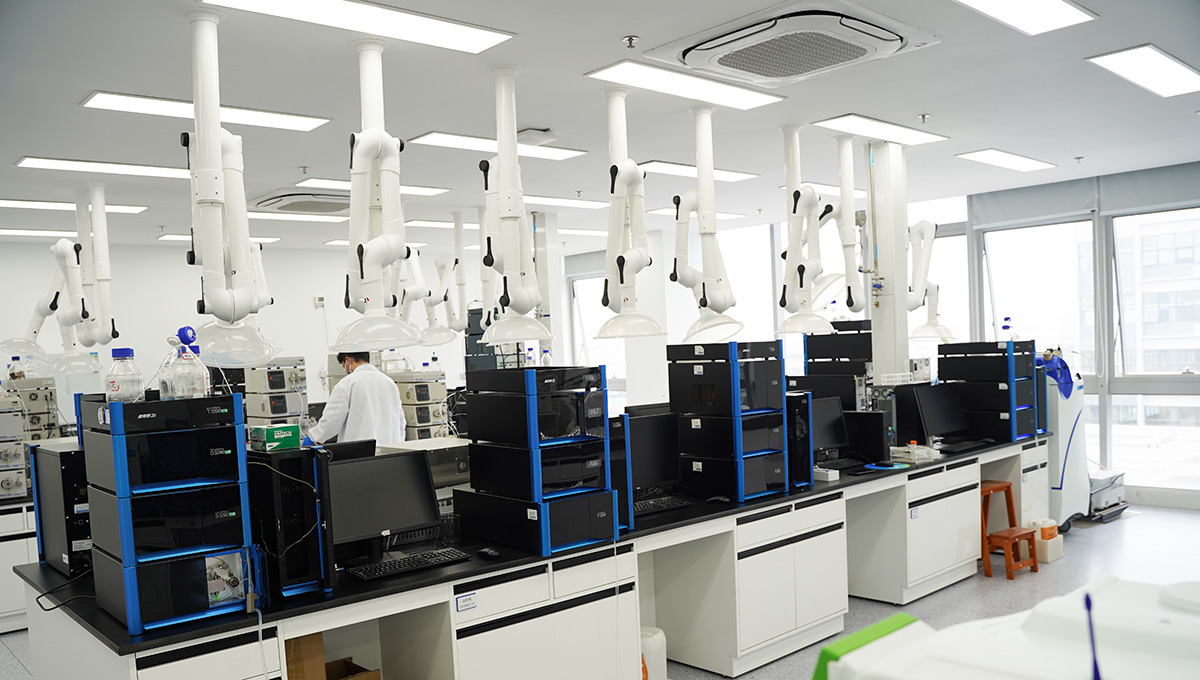
This product has an extremely wide range of applications, covering almost all quantitative and qualitative analysis fields, including the following specific aspects:
Separation of Mixtures
High performance liquid chromatography only requires that the sample can be made into a solution; sample volatility is not a concern. Its mobile phase selection is broad, and stationary phase types are diverse, making it suitable for separating thermally unstable, non‑volatile, dissociated or non‑dissociated substances, as well as compounds of different molecular weight ranges. For example, when purifying heat‑sensitive antibiotics in the pharmaceutical industry, or separating trace harmful additives from complex matrices in the food field, it avoids the limitations of traditional methods, ensuring separation efficiency while greatly improving experimental efficiency, making the acquisition of key components more accurate and efficient.
Biochemical Analysis
Thanks to its high resolution, high sensitivity, fast analysis speed, reusable columns, and ease of fraction collection, HPLC has been widely used in biochemistry, food inspection, pharmaceutical research, environmental monitoring, and inorganic analysis. It has become one of the most promising analytical methods for solving biochemical problems. In hospital drug quality control, it quickly determines whether the active ingredient content meets standards; in biological laboratories, researchers use it to analyse the structure of biological macromolecules, providing key data for disease research and new drug development – truly promoting progress in the life sciences and health fields.
Hyphenated Techniques
Hyphenation of HPLC with structural analysers is an important current development direction. For example, LC‑MS is widely used for the determination of carbamate pesticides and polycyclic aromatic hydrocarbons. HPLC‑IR, because it provides molecular fingerprint information that MS lacks, serves as a complementary tool to MS and is mainly used for the structural analysis of isomers and homologues. For instance, in environmental monitoring, HPLC‑IR is applied to the qualitative and quantitative analysis of hydrocarbon pollutants in water, providing a clearer understanding of pollutant types and concentrations, greatly improving analytical accuracy, depth, and scientific rigour, and offering a more reliable basis for water environment management. In agricultural product testing, LC‑MS can accurately detect trace amounts of carbamate pesticide residues, making every batch of agricultural products entering the market safer.
In which industries can a liquid chromatography be used?
Liquid chromatographs are used in a wide range of industries, including teaching, scientific research, Chinese and Western pharmaceuticals, pesticides, environmental protection, epidemic prevention, commodity inspection, food, feed, petrochemicals, coal, dyes, fine chemicals, bioengineering, and many others. It has become a trusted “analytical partner” because it plays a key role in different scenarios: helping students understand separation principles in universities, controlling drug purity in pharmaceutical R&D, tracking pollutants for environmental personnel, and safeguarding food safety for inspectors. With its precise analytical capabilities, it quietly supports the precision development of various industries.
What role does a liquid chromatography play in environmental monitoring? What are its advantages compared with the past?
In environmental monitoring, liquid chromatography can be used to determine hydrocarbon pollutants in water and non‑volatile hydrocarbons in seawater, providing advanced tools for pollution analysis and driving progress in the field. Compared with the past, the advantages are clear: pollutant screening that once took a long time can now be done much faster, making pollution source identification more targeted. At the same time, it strengthens the technical defence for the ecological health of rivers and lakes and ensures the safety of drinking water, greatly improving the efficiency and accuracy of environmental monitoring and governance.
What characteristics of HPLC make it suitable for separating a wide variety of substances?
When separating mixtures, HPLC has two core characteristics that give it a broad range of applicability. First, it has low sample requirements – the sample only needs to be made into a solution; volatility is not a concern, solving the problem of separating non‑volatile substances. Second, its separation conditions are flexible: a wide choice of mobile phases and diverse stationary phase types make it adaptable to substances with different properties, including thermally unstable, dissociated or non‑dissociated substances, and compounds of different molecular weight ranges. For example, when purifying heat‑sensitive antibiotics in the pharmaceutical industry or separating trace harmful additives in the food field, it avoids the limitations of traditional methods while balancing separation efficiency and experimental speed.