In the field of organic compound analysis, the high performance liquid chromatography (HPLC) has always been a core instrument – with its ability to accurately detect high‑boiling, thermally unstable, and large molecular weight organic compounds, it has become an indispensable tool in scientific research and industrial testing.
Structurally, a complete HPLC system consists of a solvent reservoir, a high‑pressure pump, an injector, a chromatographic column, a detector, and a recorder. The analysis process resembles a “precise screening”: the mobile phase from the reservoir is smoothly propelled by the high‑pressure pump into the system; the sample to be analyzed enters the mobile phase via the injector and is carried together with it into the column, which is packed with the stationary phase. Because different components of the sample have different distribution coefficients between the stationary and mobile phases, they repeatedly undergo adsorption and desorption in the two phases, leading to significant differences in migration speed and ultimately efficient separation. The separated components elute from the column one after another, are converted into clear electrical signals by the detector, and finally displayed as a chromatogram by the recorder, providing an intuitive basis for subsequent analysis. For these reasons, HPLC plays a vital role in many key fields, including life science research, food safety testing, drug development and production quality control, and environmental pollutant monitoring.
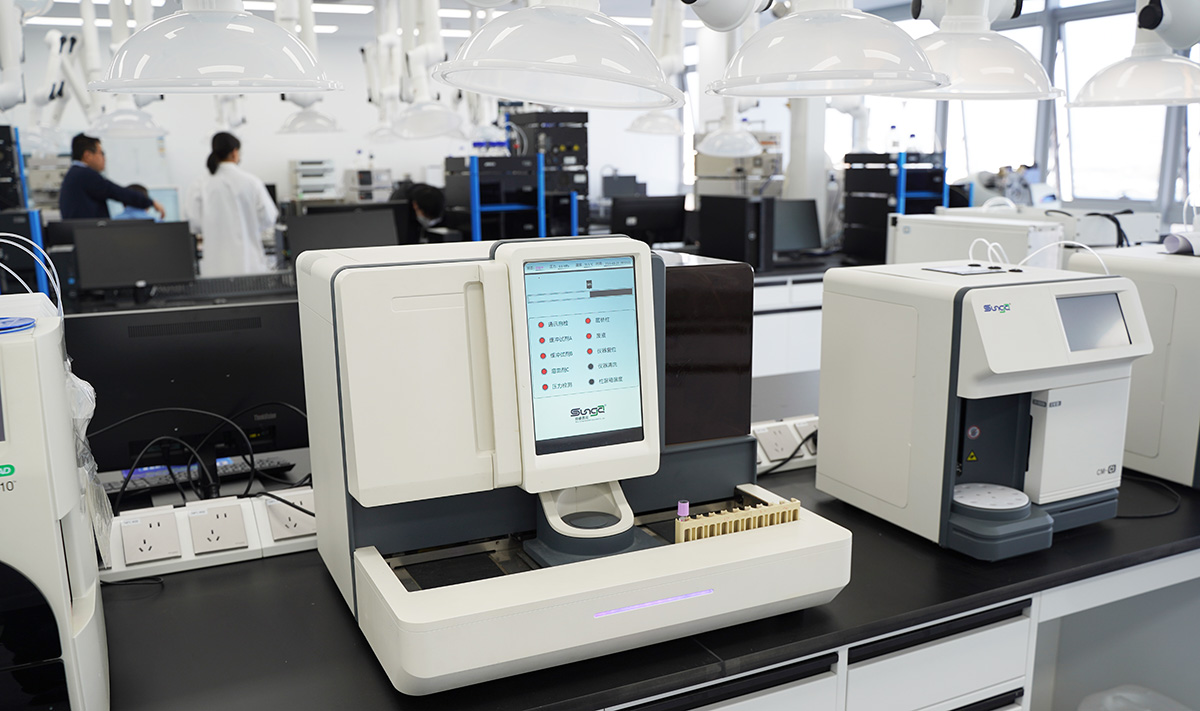
As one of the most frequently used chromatographic techniques, the core components of HPLC are similar to those of gas chromatography, but because the mobile phase is a liquid, several targeted design adjustments have been made. For example, the pump must deliver a constant and stable flow rate to ensure accurate results; the injection system must be easy to operate and have good sealing to avoid sample leakage; moreover, because liquid mobile phases have a higher viscosity than gases, HPLC columns are generally wider in diameter and much shorter than GC columns to reduce column back-pressure. These design features enable HPLC to cover the qualitative and quantitative analysis needs of the vast majority of organic compounds.
In actual analysis, after the sample solution is injected into the column, it migrates through the stationary phase under high pressure. Different components, because of their different interactions with the stationary phase, elute from the column at different times. The detector captures these components and generates corresponding peak signals, which can be interpreted to clearly determine the composition of the sample. Although the separation principle of HPLC is the same as that of classical liquid chromatography, modern HPLC incorporates advanced technologies such as high‑pressure pumps, high‑sensitivity detectors, and microparticle stationary phases, greatly improving analysis efficiency and accuracy. It is especially suitable for handling high‑boiling, large molecular weight, and widely varying polarity organic compounds, providing more reliable technical support for research and industrial testing.
Common Faults of Liquid Chromatography (HPLC) and Practical Solutions
- Excessive column back-pressure
Excessive column backpressure is a common HPLC problem, often caused by salt precipitation from the buffer accumulating in the column or by column contamination due to sample residues.
If salt precipitation is the cause, first flush the column in the forward direction with pure water at 40‑50 °C and a low flow rate. As the back-pressure gradually decreases, slowly increase the flow rate, then continue flushing with room‑temperature pure water, and finally flush with pure methanol for about 30 minutes. This will effectively remove the accumulated salt.
If the high back-pressure is due to sample contamination, it is recommended to back‑flush the column with pure water, then sequentially flush with methanol, a methanol‑isopropanol mixture (4:6, V/V), methanol, and pure water, and finally flush forward with pure methanol for 30 minutes to restore column performance.
- Bubbles in the mobile phase
Bubbles in the mobile phase are often caused by microbial growth blocking the filter after prolonged immersion in buffer solutions such as ammonium acetate. To resolve this, immerse the filter in 5% nitric acid and sonicate for a few minutes; alternatively, soak it in 5% nitric acid for 12‑36 hours, then rinse thoroughly with pure water. After that, use the instrument’s purge function to expel bubbles, open the purge valve, and flush the filter with pure water for about 1 hour.
- No liquid flow or no pressure display
If there is no liquid flow or no pressure display, the most likely causes are a worn pump seal or a large amount of air trapped inside the pump.
If the seal is worn, replace it with a new one.
If there are air bubbles inside the pump, connect a 50 mL syringe to the pump outlet and aspirate to remove the air; after the air is expelled, normal operation will resume.
- Pressure fluctuations or unstable flow
Pressure fluctuations and unstable flow are mainly caused by air in the system or by impurities between the check valve’s ruby ball and its seat.
First, ensure that the mobile phase is thoroughly degassed, and check that the liquid level in the solvent reservoir is sufficient to prevent air from entering the system.
If a check valve problem is suspected, remove the check valve, sonicate it in acetone to remove impurities, and then reinstall it. This will improve pressure and flow stability.
- Poor peak area repeatability
Poor peak area repeatability may be caused by a leaking injection valve, an incompletely inserted injection needle, or insufficient sample volume.
Check the sealing of the injection valve; if there is a leak, repair or replace the valve components.
Ensure that the injection needle is fully inserted, and verify that the sample solution volume meets the analytical requirements. This will improve peak area repeatability.
- Split peaks or abnormal peak shapes
Split peaks or abnormal peak shapes are commonly caused by column contamination or collapse of the packing at the column inlet.
If the column is contaminated, clean it according to the appropriate cleaning procedure.
If the packing at the column inlet has collapsed, remove the damaged top layer of packing, refill with fresh packing, add a drop of methanol to compact it, and then flush the top of the column with methanol until clean. This will restore the column’s separation performance.