Analytical Method and Standard Interpretation for Fermented Soybean (Dan Dou Chi)
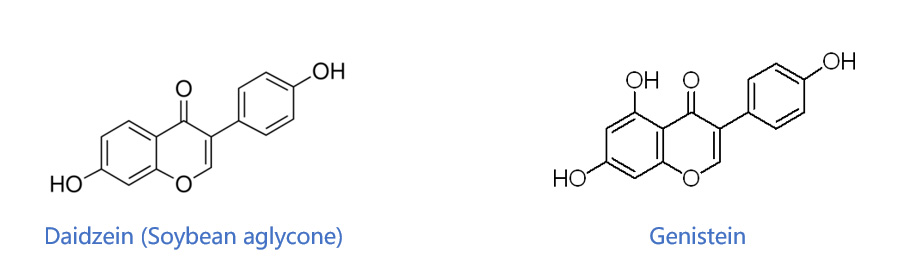
- Analyte: Daidzein (Soybean aglycone), Genistein
- System: EClassical 3200L HPLC system
- Column: Supersil ODS2 (4.6 mm × 250 mm, 5 µm)
- Highlight: The method for daidzein and genistein in fermented soybean meets the 2025 ChP requirements, resolving two impurity peaks with >13,000 plates.
Introduction
Fermented soybean (Dan Dou Chi) is a traditional Chinese medicinal material. Its quality standards have been continuously refined with technological advancements. The 2025 edition of the Chinese Pharmacopoeia introduces new requirements for the assay of active components in Fermented Soybean. This article details an HPLC method using the Elite EClassical 3200 system for determining the active ingredients in Fermented Soybean and provides a comparative analysis of the key changes introduced in the 2025 edition.
Overview of the Therapeutic Effects of Fermented Soybean
Fermented soybean is a processed product derived from the mature seeds of Glycine max (L.) Merr. through fermentation. Its properties are described as bitter, pungent, and cool, and it acts on the Lung and Stomach meridians. It has the effects of relieving the exterior, relieving irritability, and dispersing stagnant heat. Clinically, it is primarily used to treat common colds, chills and fever, headache, restless chest tightness, and insomnia due to deficiency and restlessness.
Modern pharmacological research indicates that the main active components in Fermented Soybean are daidzein and genistein, both of which are isoflavone compounds. These components have antipyretic and sedative effects on the nervous system, consistent with the traditional efficacy of Fermented Soybean in treating "restlessness and insomnia." Studies have also found that these components possess certain antioxidant and endocrine-regulating properties.
Key Changes in the Fermented Soybean Standard: 2025 vs. 2020 Chinese Pharmacopoeia
The 2025 edition of the Chinese Pharmacopoeia introduces significant revisions to the quality standards for Fermented Soybean, with the most notable change being a substantial increase in the assay limit.
Significantly Higher Content Limit: The 2025 Pharmacopoeia stipulates that the total content of daidzein and genistein in Fermented Soybean shall be not less than 0.10%, compared to the 2020 limit of not less than 0.040%. This represents a 2.5-fold increase, reflecting a considerable elevation in quality requirements for this medicinal material.
More Rigorous Analytical Methodology: The new edition explicitly requires that, during the system suitability test, the theoretical plate number for both daidzein and genistein peaks shall be no less than 5000, ensuring the chromatographic separation meets quantitative analysis standards.
Enhanced Safety Controls: The 2025 Pharmacopoeia systematically strengthens the control of exogenous hazardous substances such as prohibited pesticides, heavy metals, and harmful elements in traditional Chinese medicines. These changes also apply to the standards for Fermented Soybean.
HPLC Method for the Determination of Daidzein and Genistein in Fermented Soybean
- Chromatographic Conditions
Chromatography System: EClassical 3200 system equipped with D3230 Diode Array Detector.
- Column: Supersil ODS2 (4.6 mm × 250 mm, 5 µm).
- Mobile Phase: Acetonitrile / 1% glacial acetic acid aqueous solution = 25 / 75 (V/V).
- Flow Rate: 1.0 mL/min.
- Detection Wavelength: 260 nm.
- Column Temperature: 35°C.
- Injection Volume: 10 µL.
- System Suitability Requirements
The theoretical plate number calculated for both the daidzein and genistein peaks shall be no less than 5000.
- Preparation of Reference Solutions
Accurately weigh approximately 10 mg each of daidzein and genistein reference standards into separate 10 mL volumetric flasks. Dissolve and dilute to volume with methanol to obtain stock solutions. Accurately transfer 1 mL of each stock solution into a single 50 mL volumetric flask, dilute to volume with methanol, and mix well. This yields a mixed reference solution containing 20 µg/mL of each component.
- Preparation of Test Solution
Weigh approximately 1 g of Fermented Soybean powder (passed through a No. 2 sieve) and record the weight accurately. Transfer to a stoppered conical flask. Add exactly 25 mL of methanol, weigh, and record the initial weight. Heat under reflux for 1 hour, allow to cool, and reweigh. Make up the weight loss with methanol, mix well, and filter. Collect the subsequent filtrate for analysis.
- Assay Procedure and Limit Requirements
Inject 10 µL each of the reference solution and the test solution into the HPLC system, record the chromatograms, and calculate the content of daidzein and genistein using the external standard method based on peak area.
Pharmacopoeia Content Limit: Calculated on the dried basis, the total content of daidzein and genistein in Fermented Soybean shall be not less than 0.10%.
Experimental Results and Analysis
- Chromatographic Separation
Using the Supersil ODS2 column, the chromatogram of the Fermented Soybean test solution is shown below:
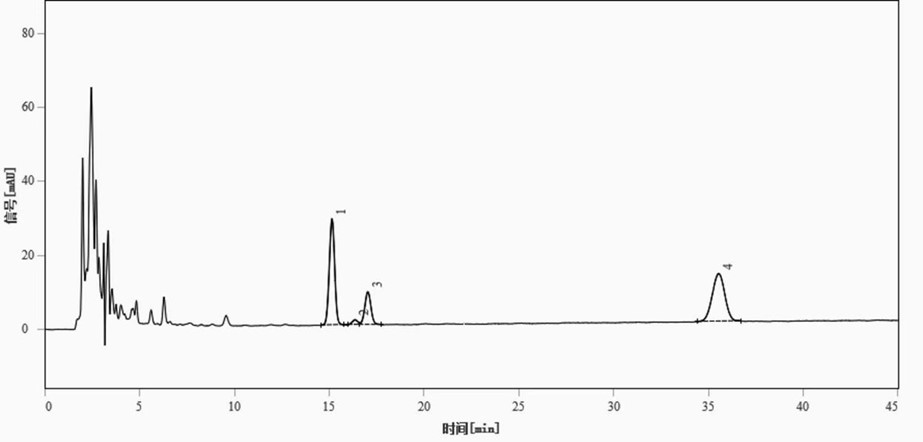
Figure 1. Chromatogram of Fermented Soybean test solution on Supersil ODS2 column.
Peaks: 1- Daidzein, 2- and 3- Impurity, 4- Genistein
As shown in Figure 1, under these chromatographic conditions, daidzein (peak 1) and genistein (peak 4) were well separated and fully resolved from adjacent impurity peaks (peak 2 and 3). System suitability parameters indicated a plate number of 13,233 and a tailing factor of 0.985 for the daidzein peak, and a plate number of 13,246 and a tailing factor of 0.978 for the genistein peak, all meeting the pharmacopoeia requirements.
- Column Selection
To select the appropriate column, six different columns were compared for their separation performance on the Fermented Soybean test sample. Key separation parameters are summarized in Table 1.
Table 1. Comparison of Separation Performance of Different Columns for Fermented Soybean Test Solution
|
Column Type
|
Daidzein RT (min)
|
Genistein RT (min)
|
Resolution between Daidzein (Peak 1) and Impurity Peaks
|
Number of Impurity Peaks
|
Resolution between Genistein (Peak 4) and Impurity Peaks
|
|
Supersil ODS2, 5 µm
|
15.150
|
35.541
|
2.238 (Rs = 1.148)
|
2
|
20.223
|
|
SinoPak C18, 5 µm
|
11.280
|
24.748
|
2.965
|
1
|
21.888
|
|
SinoPak BEH T-C18, 5 µm
|
11.707
|
26.109
|
3.171
|
1
|
23.303
|
|
SinoChrom ODS-AP, 5 µm
|
16.116
|
36.964
|
1.821 (Rs = 2.281)
|
2
|
22.641
|
|
Vendor K C18, 5 µm
|
14.773
|
34.667
|
3.373
|
1
|
21.610
|
|
Vendor W C18, 5 µm
|
10.270
|
21.801
|
2.867
|
1
|
20.761
|
As shown in Table 1, all six tested columns separated daidzein (Peak 1) and genistein (Peak 4). However, the Elite Supersil ODS2 and SinoChrom ODS-AP columns were able to resolve two impurity peaks (Peaks 2 and 3), while other columns detected only one impurity peak. This demonstrates their superior resolving power for Fermented Soybean samples under the specified chromatographic conditions. Therefore, the Supersil ODS2 and SinoChrom ODS-AP columns are more suitable for pharmaceutical quality control. Between the two, the Supersil ODS2 column provides better separation of daidzein from impurities. Additionally, the target analytes on the Supersil ODS2 column exhibited good peak symmetry (tailing factors near 1.0) and high efficiency (plate numbers exceeding 13,000), fully meeting the requirements of the 2025 Chinese Pharmacopoeia for the assay of Fermented Soybean.
- Conclusion
This study validated that the Elite EClassical 3200 HPLC system coupled with a Supersil ODS2 column fully satisfies the requirements of the 2025 Chinese Pharmacopoeia for the assay of Fermented Soybean. This method offers the following advantages:
Excellent Separation: Daidzein, genistein, and adjacent impurity peaks achieved baseline separation without interference.
Reasonable Analysis Time: A complete run takes approximately 40 minutes, suitable for routine quality control.
Good System Suitability: Parameters such as theoretical plate number and tailing factor meet Pharmacopoeia requirements.
Strong Specificity: The use of a diode array detector allows for further confirmation of peak purity.
Summary
The 2025 Chinese Pharmacopoeia significantly raises the quality standards for Fermented Soybean, particularly by increasing the total content limit for daidzein and genistein from 0.040% to 0.10%. This places higher demands on the accuracy and reliability of the analytical method. The HPLC method established in this article, utilizing the Elite EClassical 3200 system with a Supersil ODS2 column, a mobile phase of acetonitrile-1% glacial acetic acid (25:75), and detection at 260 nm, effectively separates and accurately quantifies daidzein and genistein in Fermented Soybean. The comparison of six different columns highlights the importance of column selection for this analysis, with the Supersil ODS2 column demonstrating the best separation performance. This method is accurate, reliable, and reproducible, fully meeting the requirements of the 2025 Chinese Pharmacopoeia for Fermented Soybean content determination, providing robust technical support for its quality control.