Source: VBDATA (www.vbdata.cn) - Focused on reporting and research on industrial innovation and transformation in the life health sector driven by technology.
Elite, a company that has achieved numerous “firsts” in China, including the first commercialized chromatographic column, the first commercialized liquid chromatography instrument, the first commercialized diode array detector, and the first commercialized quaternary low-pressure system liquid chromatography instrument, is also the only domestic enterprise with mass production experience in both chromatographic instruments and consumables.
Since its establishment in 1993, Elite has focused on the liquid chromatography field, adhering to independent research and development and design. After over 30 years of technological breakthroughs, the company has accumulated more than 100 technical patents. As an industry leader, Elite took the lead in formulating several national standards, including GB/T 26792-2019 “High Performance Liquid Chromatograph”, GB/T 38125-2019 “Autosampler for Liquid Chromatograph”, and GB/T 25478-2010 “Chromatographic Data Workstation”.
The company’s products achieve 100% domestic design and over 95% localization of components. To date, Elite has sold more than 17,000 liquid chromatography instruments and over 200,000 chromatographic columns, leading the domestic market share.
With a global perspective, Elite has expanded its sales overseas, reaching strategic cooperation agreements with well-known international pharmaceutical clients. Currently, the company’s products cover 45 countries worldwide, including the United States, Canada, the United Kingdom, Italy, and Russia.
Despite the global analytical instrument market facing economic downturns, with slowed procurement growth in clinical and pharmaceutical sectors and declining performance among many leading imported manufacturers, Elite achieved a 25% year-on-year sales growth in the first half of 2024. The company not only consolidated its existing market share but also successfully expanded into emerging markets in Africa and Southeast Asia.
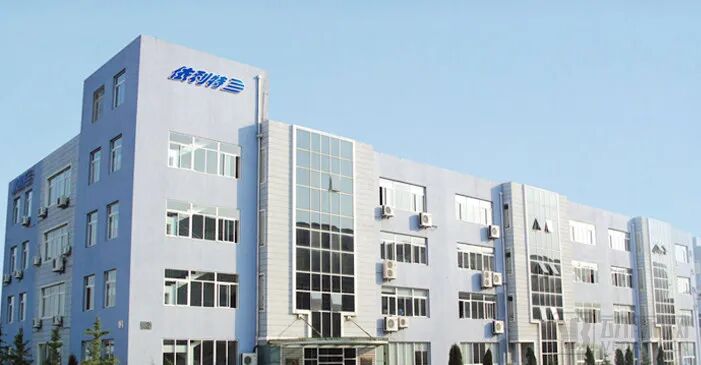
Elite Company Image
Notably, within just four months this year, Elite attracted nearly 200 million yuan in financing from over ten renowned investment institutions, including top-tier investors like Joy Capital, Guotai Junan Ventures, Suzhou High-tech Golden Control, and Suzhou Guofa Ventures.
In an interview with VBDATA, Li Yabo, General Manager of Elite, stated that the core purposes of this financing are to supplement working capital, accelerate the layout and expansion of domestic and international sales networks, and expand production capacity and product lines to meet market demands and strengthen competitive advantages, given the numerous cooperation orders the company has received both domestically and internationally.
Domestic Liquid Chromatography Instruments Break Through Difficulties
Liquid chromatography (LC) is a crucial analytical instrument for organic compounds, playing a vital role in scientific research, pharmaceuticals, environmental testing, food safety, and other fields. It separates components in complex mixtures through interactions between the sample, mobile phase, and stationary phase, enabling component analysis and purity testing. High-performance liquid chromatography (HPLC) is the primary type of liquid chromatography instrument.
Despite its seemingly ordinary appearance, liquid chromatography instruments contain nearly 3,000 precision components that must work in perfect harmony. The system design requires meticulous consideration of component interactions, including ultra-fine tubing that requires high pressure to drive liquid flow while preventing leaks.
Chromatographic columns, as consumables, serve as the “heart” of liquid chromatography instruments, requiring high pressure, sealing, flow stability, and constant temperature control. Each component demands exceptional expertise in materials science, sealing technology, and fluid mechanics.
China’s liquid chromatography market is large but has low localization rates. According to SDI data, the Chinese chromatograph market reached approximately 10.7 billion yuan in 2020, with a CAGR of about 8.2% from 2016 to 2020, making it the fastest-growing region globally. In 2022, imports of liquid chromatography instruments exceeded 22,477 units with a total value of over 6.4 billion yuan, while domestic sales were only around 300 million yuan, representing a localization rate of approximately 5%.
The global mid-to-high-end liquid chromatography market is dominated by companies like Waters, Agilent, and Shimadzu. However, China’s liquid chromatography industry has seen significant breakthroughs:
- In 1953, the Dalian Institute of Chemical Physics designed China’s first volume chromatograph to meet national economic development needs and break import monopolies.
- In 1993, Dalian Elite Scientific Instruments Co., Ltd. was established, launching China’s first commercialized liquid chromatography instrument (P100 series), marking the beginning of domestic commercial production.
- In 2000, Dalian Elite Analytical Instruments Co., Ltd. was founded to further promote chromatographic technology development.
- In 2018, Elite invested in a new factory in Suzhou Industrial Park’s Nano City to meet growing market demand.
- In March 2023, Suzhou Elite Technology Co., Ltd. was established, becoming the operational entity with 100% ownership of Dalian Elite Analytical Instruments Co., Ltd.
Through relentless efforts and innovation, Elite has successfully broken through the market dominated by foreign giants, making significant contributions to the localization of China’s liquid chromatography instruments.
Focused on Liquid Chromatography for Over 30 Years, Providing Comprehensive Chromatography-Based Solutions
As noted by renowned industry observer Lin Xueping: “Entrepreneurs in scientific instruments are like ascetic monks, carrying two mountains on their shoulders: manufacturing reliability and unstable supply chains.”
Regarding manufacturing reliability, Elite has accumulated extensive know-how and independent intellectual property rights through over 30 years of experience and user feedback. It is one of the few domestic manufacturers capable of independently developing and producing both hardware and software for liquid chromatography instruments, and one of the rare companies with mass production capabilities for both instruments and columns. Based on its understanding of downstream applications and global user feedback, Elite can quickly respond to demands from clinical and emerging biotech fields, developing user-friendly and cost-effective instruments.
“The challenge in liquid chromatography instruments lies not in ‘0-1’ innovation but in ‘1-100’ mass production with consistent quality,” said Li Yabo. Taking the high-pressure constant flow pump, a key component in HPLC systems, as an example, its design and production require solving multiple technical challenges such as precise flow control, pulse-free delivery, and accurate mixing in gradient elution. Each component requires meticulous工艺调整 and continuous refinement to ensure exceptional performance and stability.
Even in foreign manufacturers’ instruments, core components often come from multiple countries: vacuum degassers from SYSTEC (a subsidiary of IDEX in the US), high-pressure switching valves from Rheodyne or VICI (subsidiaries of IDEX in the US), and deuterium lamps and silicon photodiodes from Hamamatsu in Japan.
While assembly would be easy using imported components, Elite understands that true independence and sustainable development require mastering core technologies and building a robust domestic supply chain. Therefore, the company has persisted in independent research and development, promoting localization of upstream supply chains. Currently, Elite achieves 100% domestic design and over 95% component localization.
Li Yabo emphasized that domestic substitution is not simply replacing foreign brands but building a reliable supply chain system centered on user needs, which is particularly crucial in the analytical instrument industry.
Rather than focusing on a single breakthrough direction, Elite has chosen comprehensive development in chromatographic technology, building a business structure integrating “laboratory physical and chemical analysis + upstream purification in emerging biotech + clinical analytical testing”. Its product line covers various fields, including 1100/3100/3200/3200L series HPLC instruments, chromatography workstation software, MS² Vertical 9100 triple quadrupole mass spectrometer, gas chromatograph, preparative purification chromatography system, metering pump, chromatographic columns, and accessories.
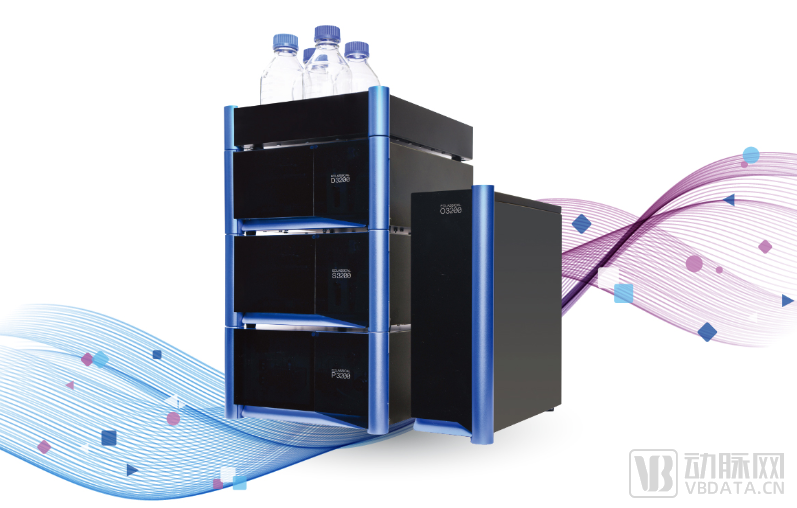
Taking Elite’s flagship product, the EClassical 3200L ultra-high performance liquid chromatograph, as an example: it has a maximum pressure resistance of 90 MPa and supports ultra-high performance liquid chromatography analysis. The instrument offers multiple pump configurations (binary, quaternary, dual binary), with a patented seesaw hydraulic pulse damper that significantly reduces flow pulsation, and T-type premix connectors and gradient mixers that enhance mixing efficiency. It features rapid injection (as fast as 1 second) and multiple temperature control modes (heating, cooling, intelligent).
EClassical 3200L
In terms of software, the market has many incompatible software options that hinder instrument interoperability. To address this issue, Elite developed a dedicated chromatography workstation software from the ground up. This standalone software integrates database management, audit trails, GMP compliance, data archiving and backup, electronic signature verification, fine-grained permission settings, and network management. It meets strict GMP and FDA audit trail standards, and its test results are widely recognized in China, the Asia-Pacific region, and other countries with mutual recognition agreements. The software is also highly scalable and can integrate with other equipment.
Elite is currently preparing to launch a network version of the software to better meet the specific needs of high-end users such as pharmaceutical companies and promote more intelligent and networked laboratory management.
Overseas Business Doubles Annually, Far East Market Becomes Main Overseas Focus
In terms of commercialization, Elite’s business covers three major sectors: analytical laboratories, preparative purification, and in vitro diagnostics, serving university research, corporate R&D, pharmaceutical industry, and in vitro diagnostic needs. After over 30 years of development, the company has accumulated more than 8,000 clients across various industries, including food, pharmaceuticals, agriculture, forestry, aquaculture, environment, third-party testing, chemicals, and education.
Discussing opportunities and challenges for domestic scientific instruments, Li Yabo pointed out that national policies promoting equipment upgrades and domestic substitution have brought development opportunities for domestic manufacturers. Meanwhile, in the current economic environment, clients are more cautious in purchasing decisions, making “high quality at reasonable prices” a more significant advantage for domestic instrument manufacturers. However, domestic manufacturers must be prepared for intensified competition as foreign brands may increase efforts to capture the Chinese market due to global market fluctuations or declining performance.
As a pioneer in domestic liquid chromatography instruments going global, Elite’s products cover 45 countries worldwide. The company’s overseas business has maintained double-digit annual growth in recent years. With changes in the international economic and political landscape, the Far East market has become the main focus of Elite’s overseas expansion. The company has also successfully broken through barriers in emerging markets in Africa and Southeast Asia, further expanding its global business footprint.
Elite emphasizes consistent customer experience both domestically and internationally, highlighting product reliability and service quality. In overseas markets, the company implements a flexible after-sales service strategy based on regional sales performance: in emerging markets or regions with initial sales, the company focuses on building local distributor capabilities; as business scales up, it establishes dedicated local sales and service teams to ensure timely and high-quality service.
Looking ahead, Elite will further focus on R&D of chromatographic products for biopharmaceutical applications and actively embrace the global market. The company will showcase its innovative achievements and brand strength through participation in renowned international exhibitions and other channels, aiming to further expand global market share and enhance international influence.
References:
- “Domestic No. 1! Suzhou’s Mysterious Company Attracts Investment: 10 Investment Institutions in 4 Months”, Maker Commune
- “Elite: 30 Years of Building a Premier Brand, Dream Team Starts New Journey”, Analysis and Testing Encyclopedia Network