Analysis principle
The most commonly used method for amino acid analysis at present is to react amino acids with derivatization reagents containing hydrophobic groups before separation to form compounds that are conducive to retention and separation on a reversed-phase column. After column separation, qualitative and quantitative analysis is carried out through the corresponding detector, which is the pre-column derivatization method.
The Elite-AAP amino acid analysis system uses phenyl isothiocyanate (PITC) as the pre-column derivatization reagent. Under alkaline conditions, amino acids react with PITC to form phenylamino thioformamide (PTC) derivatives with ultraviolet absorption, which are then separated and detected.
This derivatization method is not only simple to operate, but also ensures stable derivatization products, and provides accurate qualitative and quantitative analysis of samples. Its disadvantages are that the derivatization reagents have an impact on the lifespan of the chromatographic column, and the linearity of cystine is not good.
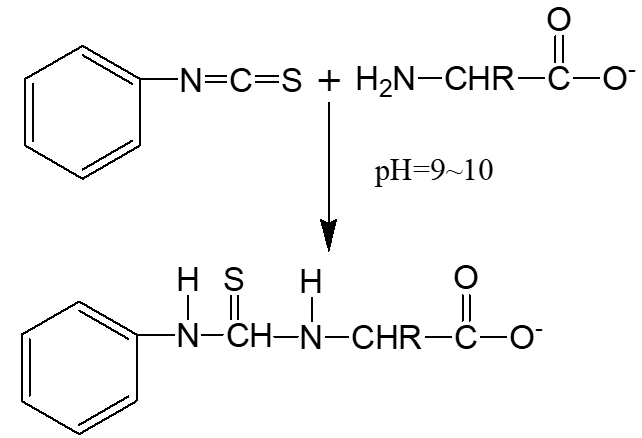
Amino acid derivatization reaction equation
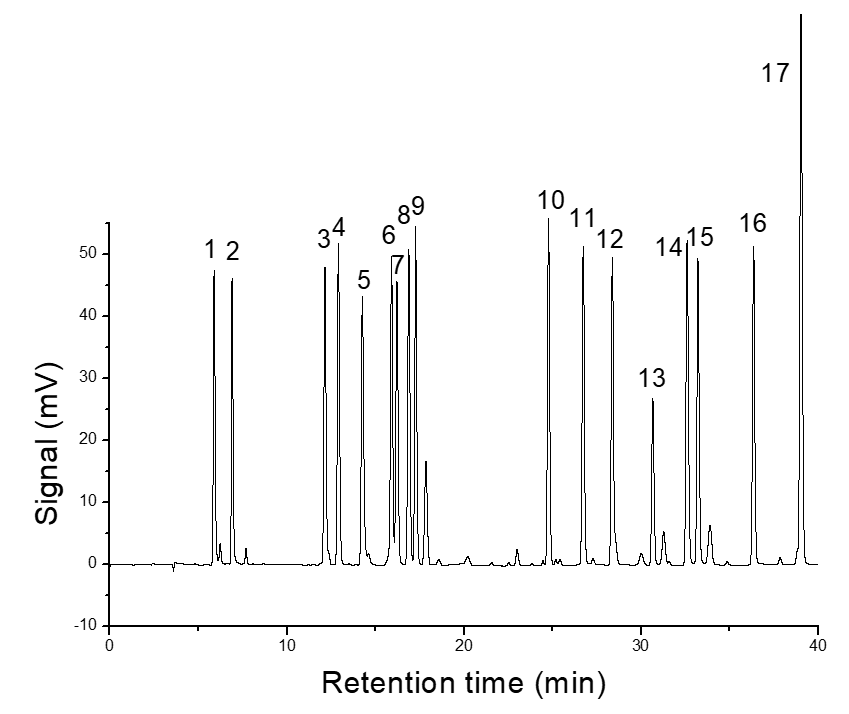
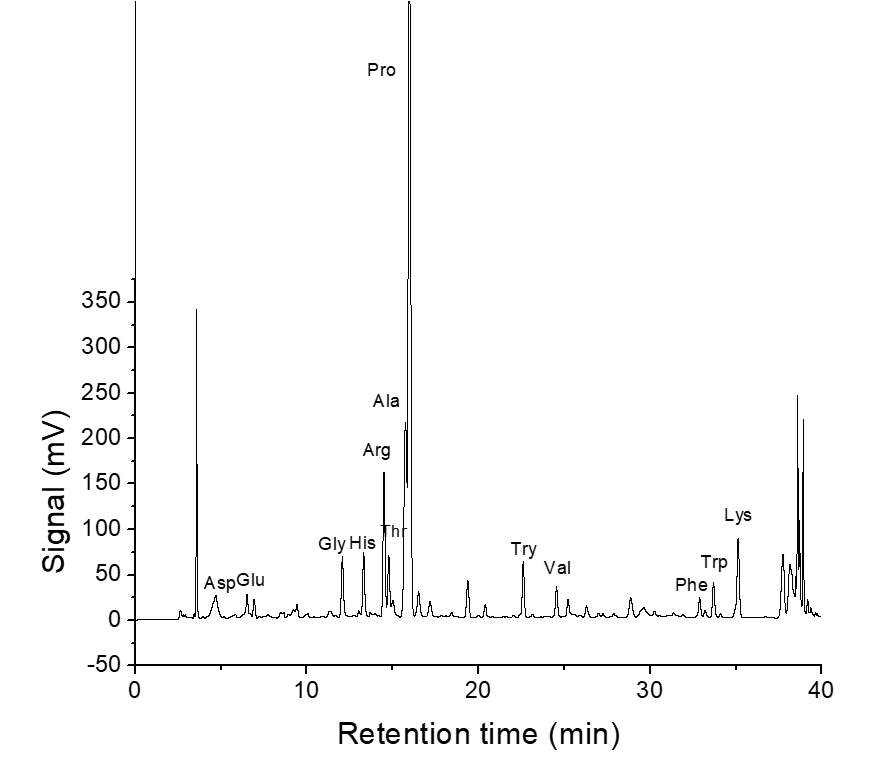
the standard fractions of the 18 basic amino acids
1. Asp aspartic acid; 2. Glu glutamic acid; 3. Ser serine; 4. DNP-OH 2, 4-dinitrophenol; 5. Arginine 6. Gly glycine; 7. Thr threonine 8. Pro proline 9. Ala alanine; 10. Val valine; 11. Met methionine; 12.Cys cysteine; 13. Ile isoleucine; 14. Leucine 15. Trp tryptophan; 16. Phe phenylalanine; 17. Histidine 18. DNFB 2, 4-dinitrofluorobenzene; 19.Lys lysine; 20. Tyr tyrosine