English

Elite-AAK Amino Acid Analysis Column

The Elite-AAK amino acid analysis column has good selectivity for all 18 kinds of amino acids and excellent separation effect.

  • The separation effect is good

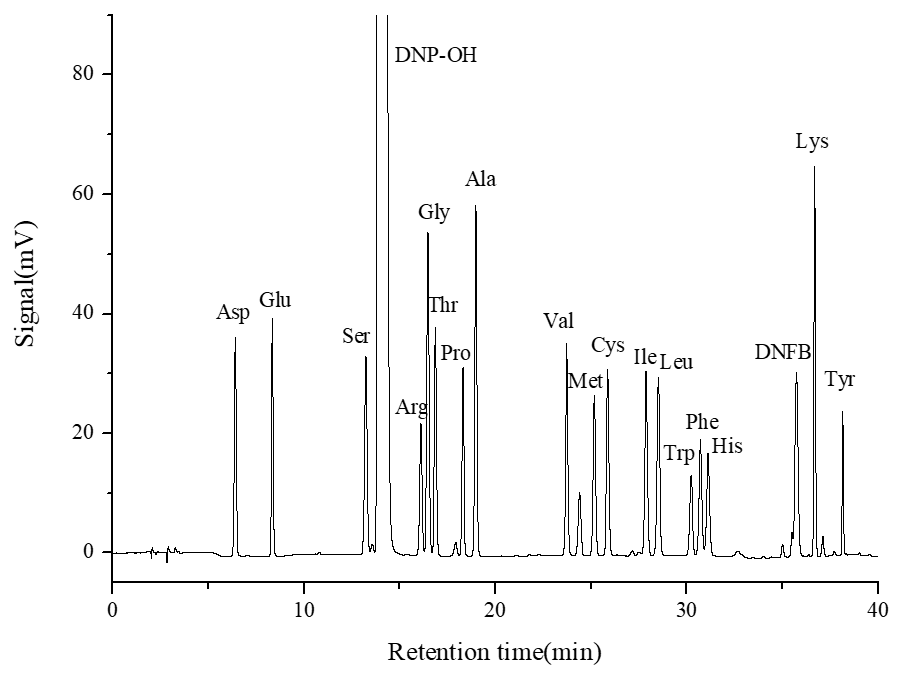
The combination of DNFB pre-column derivatization and gradient programs can effectively separate 18 basic amino acids, and the separation effects all reach baseline separation.

  • It has excellent qualitative and quantitative stability

The system has extremely high stability. After seven consecutive injections, the retention time RSD of 18 amino acids is ≤0.25%, and the peak area RSD is ≤0.8%.

  • extremely high method sensitivity

Taking Asp as an example, the detection sensitivity is 4.73×10⁵ mV·L/mol, and the minimum detection limit is 7.44×10⁻¹²mol.

  • The instrument has a low cost

Pre-column derivatization and conventional UV detector detection in HPLC systems do not require additional equipment, reducing costs.

  • Youdaoplaceholder0 Multi-purpose

This amino acid analysis system can be used as a conventional HPLC system.

  • Low operating cost

Buffer solutions and organic solvents are used as the mobile phase, and no special reagents are required, which makes the analysis cost very low.

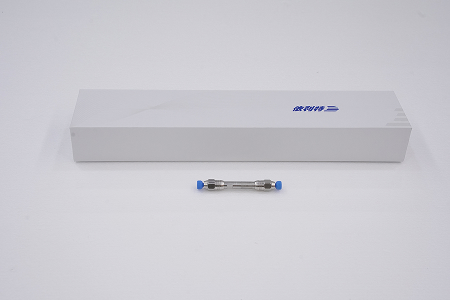
Elite-AAK Amino Acid Analysis Column

Application

  • Column: Elite AAK 4.6×250mm
  • Mobile phase: A,Acetonitrile / water= 1 / 1 (v/v) B, Buffer Gradient elute
  • Flow rate: 1.2 mL/min
  • Detection wavelength: 360 nm
  • Column temperature: 27 ℃

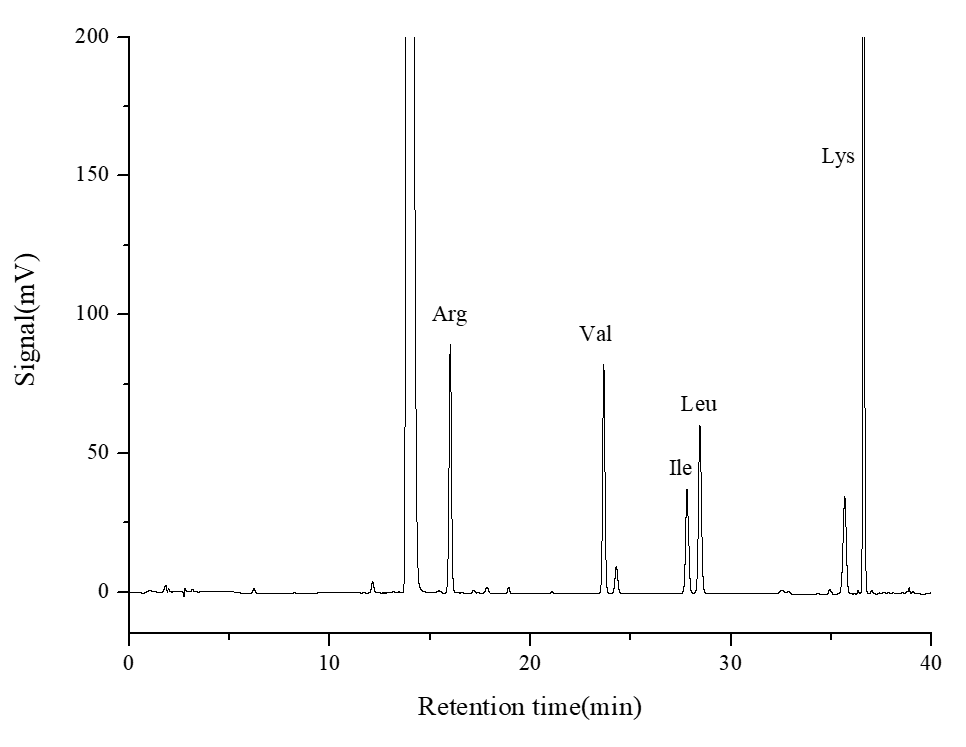
Amino acid sugar-free drinks

Sample processing: Dilute fourfold with derivatization buffer solution and then filter through a 0.45µm filter membrane. Derivative Analysis.

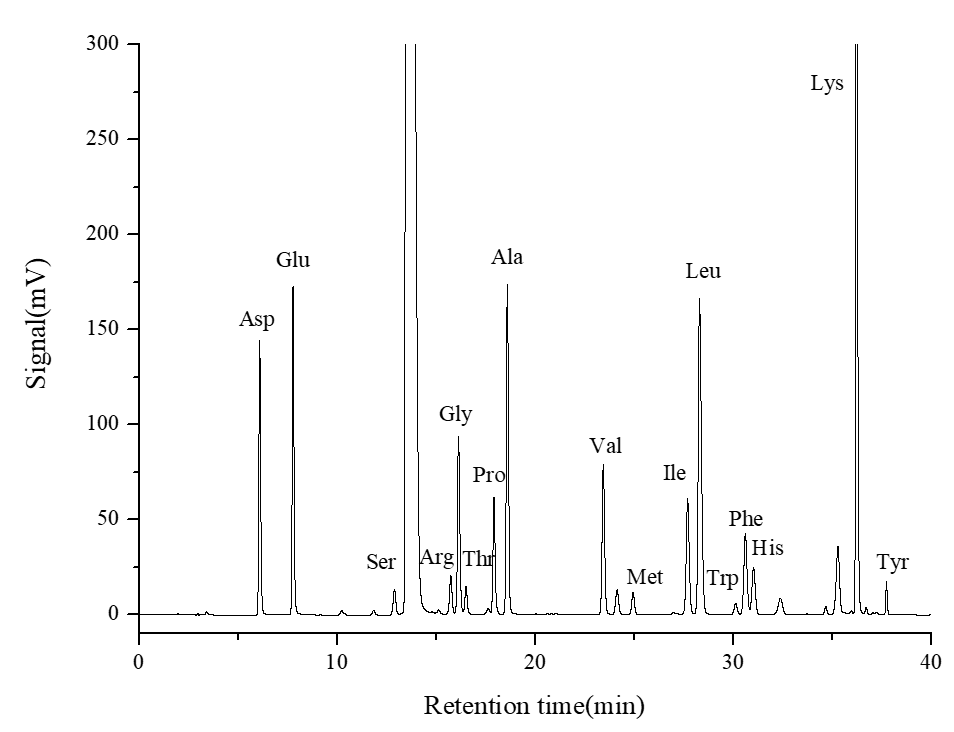
Amino acids in brain protein hydrolysate

Sample processing: Dilute 5 times with derivatization buffer solution, derivatize, filter and then inject.

How It Works

Analysis principle

The most commonly used method for amino acid analysis at present is to react amino acids with derivatization reagents containing hydrophobic groups before separation to form compounds that are conducive to retention and separation on a reversed-phase column. After column separation, qualitative and quantitative analysis is carried out through the corresponding detector, which is the pre-column derivatization method.

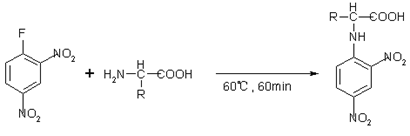
The Elit-AAK amino acid analysis system uses 2, 4-dinitrofluorobenzene (DNFB, purchased by users themselves, for preparation instructions, see 3.1) as the pre-column derivatization reagent. Under certain conditions, amino acids react with DNFB to form dinitrophenol amino acid derivatives with ultraviolet absorption (DNP-AA), which are then separated and detected. The specific reaction equation is shown in Figure 1-2. This derivatization method is not only simple to operate, but also accurate in qualitative and quantitative analysis of samples.

Figure 1-2 Amino acid derivatization reaction equation

the standard fractions of the 18 basic amino acids

1.Asp aspartic acid; 2. Glu glutamic acid; 3. Ser serine; 4. DNP-OH 2, 4-dinitrophenol; 5. Arginine 6. Gly glycine; 7. Thr threonine 8. Pro proline 9. Ala alanine; 10. Val valine; 11. Met methionine; 12.Cys cysteine; 13. Ile isoleucine; 14. Leucine 15. Trp tryptophan; 16. Phe phenylalanine; 17. Histidine 18. DNFB 2, 4-dinitrofluorobenzene; 19.Lys lysine; 20. Tyr tyrosine

Ordering Information

Name  SpecificationP/N
Elite AAK Column4.6×25031110091-C
Amino acid reagent kit31990021
Reference standards18 amino acids31990022
Derived solid component A25g
Derived solid component B100g
Equilibrium solid component A25g
Equilibrium solid component B50g
Solid B80g
For guard columns, SPE columns, and laboratory general consumables, please feel free to contact us.

Contact Us

Thanks
Your info had been submitted.
Contact us
×
* Required field
Thanks
Your info had been submitted.