Determination of Neurotransmitters in Biological Samples by HPLC
- Analyte: γ-Aminobutyric acid (GABA), Norepinephrine
- System: EClassical 3200L UHPLC System
- Column: Elite APP Amino Acid Analysis Dedicated Column (5 μm, 4.6 × 250 mm) for GABA
- Supersil ODS2 (5 μm, 4.6 × 250 mm) for Norepinephrine
- Highlight: A comprehensive HPLC approach for the determination of neurotransmitters.
Introduction
Neurotransmitters are chemical messengers that transmit signals across synapses, playing essential roles in regulating brain function, mood, cognition, and behavior. Imbalances in neurotransmitter levels are implicated in various neurological and psychiatric disorders, including depression, anxiety, schizophrenia, Parkinson's disease, and epilepsy. Among the most critical neurotransmitters are γ-aminobutyric acid (GABA), and norepinephrine, which modulates attention, arousal, and stress responses. Accurate measurement of these compounds in biological samples (e.g., serum, cerebrospinal fluid, brain tissue) is crucial for understanding disease mechanisms, diagnosing disorders, and monitoring therapeutic interventions. This article presents validated HPLC methods using the EClassical 3200L UHPLC system for the determination of GABA and norepinephrine, each optimized for the specific physicochemical properties of the analyte.
Standards and Reagents
Standards
GABA and norepinephrine standards (analytical grade, ≥98%)
Reagents
Acetonitrile (HPLC grade), Methanol (HPLC grade), Triethylamine (analytical grade), Phenyl isothiocyanate (PITC) (analytical grade), Sodium acetate trihydrate (analytical grade), Acetic acid (glacial, analytical grade), Citric acid (analytical grade), Disodium hydrogen phosphate (analytical grade), Sodium heptanesulfonate (ion-pair reagent), Deionized Water (≥18.2 MΩ·cm)
Standard Solution Preparation
Individual stock solutions (1.0 mg/mL): Accurately weigh 10.0 mg of each standard into separate 10 mL volumetric flasks. Dissolve GABA in water, dopamine and norepinephrine in 0.1 mol/L HCl or mobile phase. Dilute to volume and store at 4°C protected from light.
Working standard solutions: Dilute each stock solution with the appropriate mobile phase to obtain a series of calibration concentrations (e.g., 0.1–100 μg/mL depending on the analyte and application).
Derivatization reagents (for GABA): 1.0 mol/L triethylamine in acetonitrile and 0.2 mol/L PITC in acetonitrile (required for UV detection of GABA).
Sample Pretreatment
Sample preparation varies depending on the analyte and matrix. General procedures include:
For GABA (requires derivatization):
- Add methanol or acetonitrile to serum or tissue homogenate to precipitate proteins.
- Centrifuge and collect supernatant.
- Evaporate to dryness under nitrogen.
- Reconstitute in water and derivatize with triethylamine and PITC (1 h at room temperature).
- Evaporate again and reconstitute in 0.05 mol/L sodium acetate buffer.
- Centrifuge and filter through 0.22 μm membrane before injection.
For norepinephrine:
- Precipitate proteins with perchloric acid or organic solvent.
- Centrifuge and collect supernatant.
- Optionally, purify using solid-phase extraction (e.g., alumina or cation exchange cartridges) to remove interferences and preconcentrate.
Filter through 0.22 μm membrane before injection.
Instruments and Equipment
HPLC System
EClassical 3200L UHPLC system consisting of P3220L binary high-pressure pump, S3220L autosampler, D3210L UV-vis detector, O3220L column oven, T3200L solvent bottle tray, Kromstation chromatography data station
Chromatographic Conditions
For GABA
Columns: Elite APP Amino Acid Analysis Dedicated Column (5 μm, 4.6 × 250 mm)
Mobile phase: Acetonitrile/methanol/water = 60/20/20 (v/v/v)
Flow rate: 1.0 mL/min
Detection: UV at 254 nm (after PITC derivatization)
Injection volume: 10 μL
Column temp.: 40°C
For Norepinephrine:
Columns: Supersil ODS2 (5 μm, 4.6 × 250 mm)
Mobile phase: Methanol / acetonitrile / sodium heptanesulfonate solution = 10/10/90 (v/v/v)
Flow rate: 1.0 mL/min
Detection: UV at 280 nm
Injection volume: 20 μL
Column temp.: 30°C
Experimental Discussion and Results
GABA Analysis
A representative chromatogram of derivatized GABA standard (Figure 1) shows a well-resolved peak with good symmetry. Using the Elite APP amino acid analysis column, GABA elutes within a reasonable time, separated from other amino acids and matrix components. The method demonstrates high sensitivity and reproducibility, suitable for quantifying GABA in biological samples such as serum or cerebrospinal fluid.
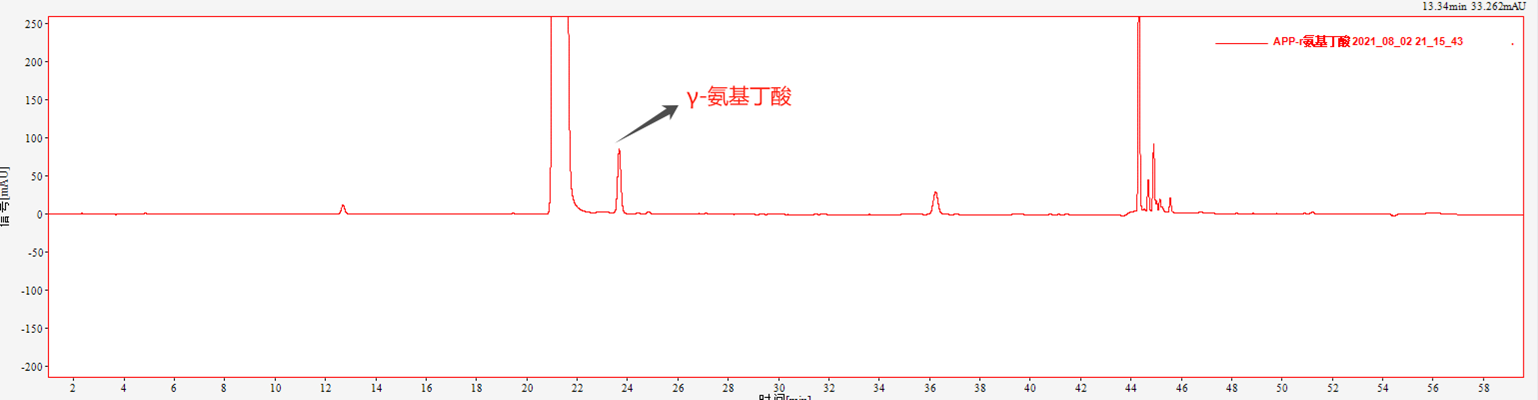
Figure 1. Chromatogram of GABA in a derivatized serum sample
Norepinephrine Analysis
Ion-pair chromatography on the Supersil ODS2 column provides effective retention and separation of norepinephrine from polar interferences. A typical chromatogram (Figure 2) displays a well-defined peak. The method achieves good linearity and precision, making it suitable for analyzing norepinephrine in plasma, urine, or tissue homogenates.
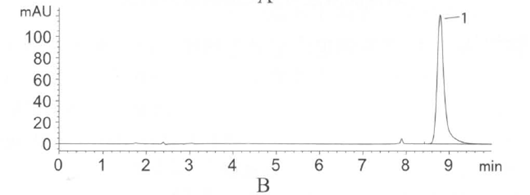
Figure 2. Chromatogram of norepinephrine standard
Conclusion
The methods exhibit satisfactory peak shape, resolution, and sensitivity. The EClassical 3200L UHPLC system, with its high pressure capability and precise flow control, supports both conventional and ultra-high-performance applications, enabling flexible method development for neurotransmitter analysis.