Immunoglobulin G (IgG) is an antibody-active protein present in dairy products such as bovine colostrum. It provides passive immunity to newborns and enhances disease resistance. In dairy processing, the IgG content is often used as an important indicator of colostrum and functional dairy product quality. High-performance liquid chromatography (HPLC) is a common method for IgG detection, typically employing a Protein G affinity column for separation with UV detection at 280 nm. This method, based on the national standard GB/T 5009.194-2003, effectively isolates and quantifies IgG in dairy products and is suitable for quality control of raw materials and finished products.
Standards: Immunoglobulin G reference standard (analytical grade)
Reagents:0.05 mol/L phosphate buffer (pH 6.5), 0.05 mol/L glycine-HCl buffer (pH 2.5), 0.45 μm microporous membrane filters, deionized water (18.2 MΩ·cm).
IgG stock solution (1.0 mg/mL): Accurately weigh 0.010 g of IgG standard, dissolve in 0.05 mol/L phosphate buffer (pH 6.5), and dilute to 10.0 mL in a volumetric flask. Mix well.
HPLC System: EClassical 3200 equipped with P3200 high-pressure pump, D3210 UV-Vis detector, S3210 autosampler, O3220 column oven, T3200 solvent bottle tray, Kromstation CDS.
Pretreatment equipment: Analytical balance, volumetric flasks, membrane filtration apparatus, etc.
- Column: Pharmacia Hi-Trap Protein G Column (1 mL)
- Mobile Phase: A: 0.05 mol/L phosphate buffer (pH 6.5), B: 0.05 mol/L glycine-HCl buffer (pH 2.5), in gradient (Table 1)
- Flow Rate: 0.4 mL/min
- Detection: UV at 280 nm
- Injection Vol.: 20 μL
- Column Temp.: Ambient
Table 1. Gradient Program
Typical chromatograms of bovine colostrum powder samples A and B are shown in Figure 1. The IgG peaks are well resolved with retention times of approximately 10.94 min. Chromatographic parameters are summarized in Table 2.
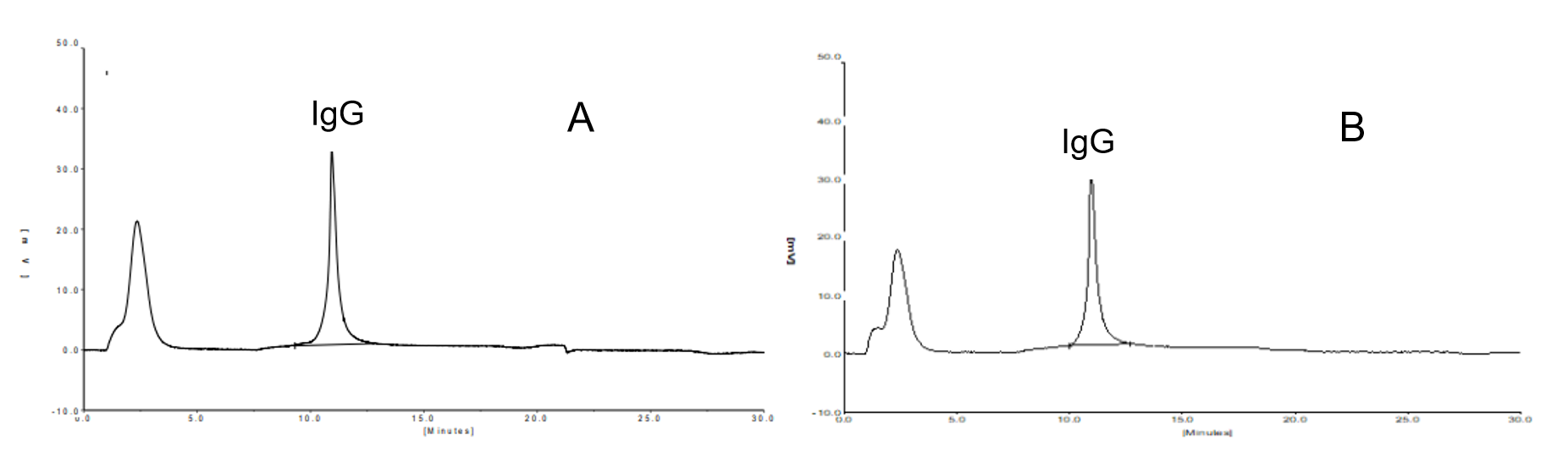
Fig. 1. chromatogram of bovine colostrum powder samples A and B
Table 1. Chromatographic parameters for IgG in bovine colostrum samples