Glutamic acid is an acidic amino acid abundantly present in cereal proteins and animal brain tissue. It is one of the constituent amino acids of proteins and plays important physiological roles in the human body. Clinically, it is used in the treatment of hepatic encephalopathy and certain neuropsychiatric disorders such as schizophrenia and petit mal epilepsy. Glutamic acid also contributes to cognitive function by maintaining excitatory neurotransmission in the brain and is widely known as a flavor enhancer (monosodium glutamate). Monitoring glutamic acid levels in serum is important for studying neurological disorders and metabolic functions. This article presents an HPLC method using the EClassical 3200L UHPLC system with pre-column derivatization for the determination of glutamic acid in human serum.
Standards
Glutamic acid standard (analytical grade, ≥99%)
Reagents
Methanol (HPLC grade), Acetonitrile (HPLC grade), Triethylamine (analytical grade), Phenyl isothiocyanate (PITC) (analytical grade), Sodium acetate trihydrate (analytical grade), Acetic acid (glacial, analytical grade), Deionized Water (≥18.2 MΩ·cm), Sodium acetate buffer (0.05 mol/L, pH adjusted to 6.5 with acetic acid).
Standard Solution Preparation
Glutamic acid stock solution (1.0 mg/mL): Accurately weigh 10.0 mg of glutamic acid standard into a 10 mL volumetric flask, dissolve in water, and dilute to volume. Store at 4°C.
Working standard solutions: Dilute the stock solution with water to obtain a series of concentrations (e.g., 5, 10, 20, 50, 100 μg/mL) for calibration.
Derivatization reagents
1.0 mol/L triethylamine in acetonitrile, 0.2 mol/L PITC in acetonitrile
HPLC System
EClassical 3200L UHPLC system consisting of P3220L binary high-pressure pump, S3220L autosampler, D3210L UV-Vis detector, O3220L column oven, T3200L solvent bottle tray, Kromstation chromatography data station.
Column: Elite APP Amino Acid Analysis Dedicated Column (5 μm, 4.6 × 250 mm)
Mobile phase: A: 0.025 mol/L sodium acetate (pH 6.5) ; B: acetonitrile/methanol/water = 60/20/20 (v/v/v), in gradient.
Flow rate: 1.0 mL/min
Detection: UV at 254 nm
Injection volume: 10 μL
Column temp.: 40°C
Standard Chromatogram
Figure 1 shows a chromatogram of glutamic acid standard under the chromatographic conditions.
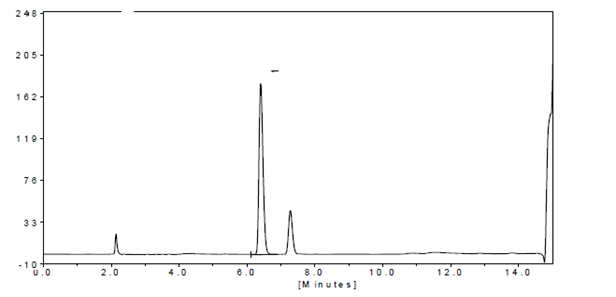
Figure 1. Chromatogram of glutamic acid standard (peak 1)
Sample analysis
Glutamic acid was well separated from real biological specimen sample, such as blood serum. A typical chromatogram of a derivatized serum sample is shown in Figure 2. The chromatographic parameters are summarized in Table 1.
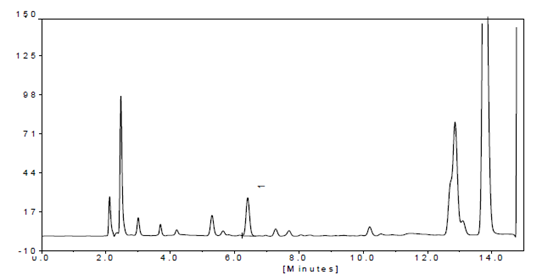
Figure 2. Chromatogram of glutamic acid in a derivatized serum sample (peak 1)
Table 1. Chromatographic parameters for glutamic acid in serum sample
The results demonstrate excellent peak symmetry (tailing factor = 1.11), high column efficiency (plate number = 17,100), and baseline separation from adjacent peaks (resolution = 5.49). The method is suitable for quantitative analysis of glutamic acid in human serum.
The described HPLC method using the EClassical 3200L UHPLC system with pre-column derivatization provides a reliable and sensitive means for determining glutamic acid levels in human serum. It offers good resolution, high column efficiency, and reproducible results, making it applicable for clinical research and diagnostic purposes related to neurological and metabolic disorders.